Harlem Renaissance


1919-1940

Study Notes

The 1920s was a decade of extraordinary creativity in the arts for black Americans called the Harlem Renaissance. Much of that creativity found its focus in the activities of African Americans living in New York City, particularly in the district of Harlem.
These years marked an especially brilliant moment in the history of blacks in America. Publications by African Americans became unprecedented in variety and scope. Poetry, fiction, drama, essays, music, dance, painting, and sculpture. There was a new sense of confidence and purpose; a sense of achievement.
Expressed in various ways, the creativity of black Americans undoubtedly came from a common source–the irresistible impulse of blacks to create boldly expressive art of high quality as a primary response to their social conditions, as an affirmation of their dignity and humanity in the face of poverty and racism. The influence of the Harlem Renaissance began to spread outward.
Serving in the armed forces contributed to a sense of worldliness. Exposure to new technologies and ideas. While Woodrow Wilson spoke of making the world safe for democracy, black people began asking why America was not safe for them. World War I and the Russian Revolution of 1917 proved that major change was possible, even in the face of a powerful autocracy and entrenched injustice.
Black writers and intellectuals were now being exposed to international ideas such as socialism and race consciousness. There were debates as to whether one should use direct political action or use the arts for social advancement. Should they work on African problems and develop Africa’s resources?
From its inception, the cultural flowering of the Renaissance was characterized by attempts to “reach out.” There was a Negritude movement among the generation of French Caribbean and African students who arrived in Paris in the late 1920s and early 1930s. The Renaissance was an international phenomenon due to the prominence of Caribbean writers.
Blacks began to be published by the white establishment.

Migration North
Segregation and poverty continued after emancipation. Migration to the North increasingly seemed an absolute necessity for blacks seeking a better life for themselves and their children.
New York City had better housing and WWI needed workers.
Harlem and New York quickly became the headquarters of many of the most important African American cultural and political national organizations, including the NAACP, the National Urban League, and Marcus Garvey’s UNIA. Newspapers and magazines played a pivotal role in setting the Renaissance in motion. The 1920s saw the pinnacle of periodical circulation. The Northern papers actively promoted the gospel of migration. Major black political organizations used paper media to spread their ideas. A smaller number of publications were associated with the black radical movements in the city. Though each publication had its own focus, each was dedicated to political progress and social uplift for black Americans and to the development of literary and artistic traditions of which the typical readers might be proud. These periodicals had a profound effect on black writings during this period, not only in subject matter but in form. It is a major reason for the preponderance of one-act plays and short stories.

The New Writers
The first glimmerings of the new day in literature probably came not with the work of a black writer but with that of a white–Three Plays for a Negro Theater, by Ridgely Torrence. James Weldon Johnson called the premiere of these plays in 1917, “the most important single event in the entire history of the Negro in the American Theatre.” Overturning the tradition of depicting blacks in stereotypical minstrel forms, Torrence’s plays featured black actors representing complex human emotions and yearnings; in this sense, they anticipated not only plays of the 1920s about blacks such as The Emperor Jones (1920) and All God’s Chillun Got Wings (1925) by the celebrated dramatist Eugene O’Neill but also the work of African American playwrights, poets, and fiction writers breaking with traditions that diminished and often insulted black humanity. Another landmark came in 1919, a year marked by several national antiblack riots, with the publication of the Jamaican-born poet Claude McKay’s militant sonnet “If We Must Die.” Although the poem never alludes to race, to black readers it sounded a note of defiance against racism and racist violence unheard in black literature in many years. Then, in 1921, the musical revue Shuffle Along, written and performed by blacks, brought to the stage novel styles of song, dance, and comedy that captivated blacks and whites alike and underscored the emergence of a new generation of black artistry.
Blues and jazz blew up within the music industry. In the literature of the Renaissance, black music and dance became flash points in larger debates about “primitivism” and propaganda.
In 1922 came James Weldon Johnson’s anthology of verse, the Book of American Negro Poetry. Johnson preferred authors who spoke well while also using their own voice. Above all, Johnson set the manipulation of language and other patterns of signification, not the overt assertion of political ideals, as the heart of the African American poetic enterprise. In the preface, Johnson pointed out things created uniquely by African Americans: spirituals, folk tales, the cake walk, and ragtime.
Like most white poets of the age, most black poets were enthralled by traditional forms of verse as established by the major British and American Romantic poets and their admirers. Modernist verse that resembles the work of Pound, for example, would not appear until much later, and then on a highly restricted scale. Unrivaled optimism emphasizing the power of endurance and survival, of love and laughter, as the only efficacious response to the painful circumstances surrounding their lives.
The New Negro (1925) edited by Alain Locke. Merging racial awareness with a desire for literary and artistic excellence, the text exuded a sense of confidence in the black world emerging from generations of repression in the U.S. Fused ethnic pride or nationalism with a desire for a fresh achievement and independence in art, culture, and politics.

Patrons and Friends
There have been questions regarding the impact of white patronage on black arts during the Harlem Renaissance. The movement did need funding. Many saw nothing but benefits in an association between blacks and whites. The two best known white patrons of the Renaissance were Carl Van Vechten and Charlotte Osgood Mason. Vechten would have interracial parties. Other entities could be patrons such as grant-awarding philanthropies, publishers, and editors.

Emerging Conflicts
Many within the Harlem Renaissance knew they were out of touch with the rest of the blacks in America. There was also a generational gap characterized by the same issues as all generation gaps.
Most working within the movement saw the Renaissance as freedom and each expressed ideas of freedom in their own way. Some were political (with older artists falling more in this category) while others were anti-political. Sexuality was another way to express freedom although sexual exploits weren’t written about or displayed any more than the general modes of the day.

Drama, Poetry, Fiction
In the theater, a combination of song, dance and humor was popular. Willis Richardson’s best-known play is The Chip Woman’s Fortune (1923), the first serious play by an African American to be staged on Broadway.
In 1926 Du Bois established the Krigwa Little Theatre movement with four basic principles. The plays of a real Negro theatre must be 1) about us; 2) by us; 3) the theatre itself should be for us and 4) near us. Drama was almost certainly one of the weakest areas of achievement in the Harlem Renaissance although there were many great actors and entertainers.
Around 1928 there was a shift away from poetry to fiction.

The Great Depression and the Decline of the Harlem Renaissance
By 1937 the Renaissance was over. It had depended on a special prosperity in the publishing industry, the theater, and the art world. The crash of Wall Street. The Great Depression. Unemployment and the rise of crime damaged the image and the reality of Harlem as an artistic and cultural paradise. Harlem Riot of 1935.
The art of the Harlem Renaissance represents a prodigious achievement for a people hardly more than a half-century removed from slavery and enmeshed in the chains of dehumanizing segregation. The Harlem Renaissance can be understood as a conversation (and at times, a debate) among African American artists and intellectuals about the very meaning of modernity from a black perspective.
In this period, black American artists laid the foundations for the representation of their people in the modern world, with a complexity and a self-knowledge that have proven durable. The Renaissance created a body of art on which future writers and musicians and artists might build and in which the masses of blacks could see their own faces and features accurately and lovingly reflected.
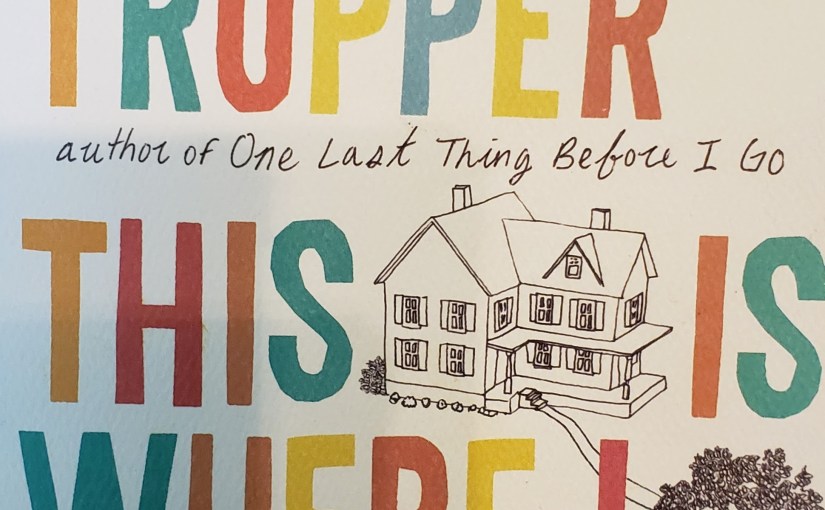
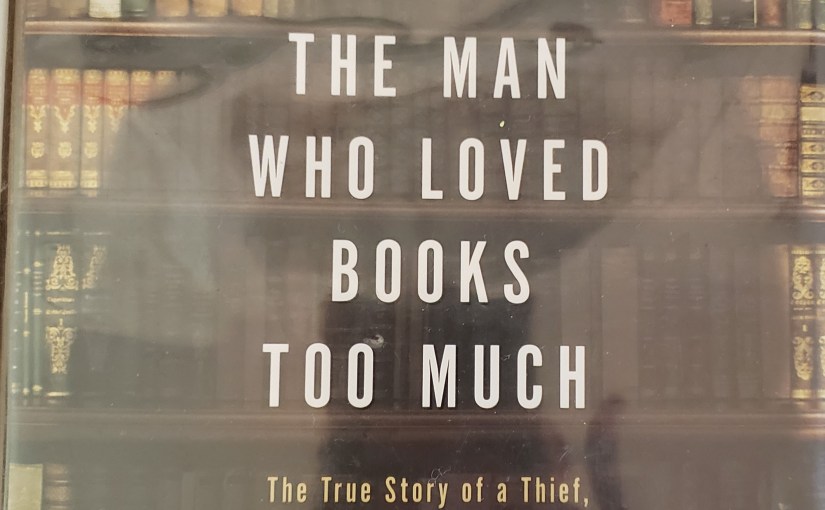
On Reading


[Author’s note: There are all types of reading material and all reading time is well-spent. This information is specifically focused on books and how to study books. Thoughts on reading are never final; I may be adding to and editing this piece until I die.]

Do not undertake the acquisition of a book lightly. In fact, do not even pick up or buy a book that you do not sincerely intend to read. Books not only take up physical space but mental space. Now you are expected to do something with that thing you bought; that money you spent. When you buy or acquire a book, you are making a promise. Think of the book as a living being. You are now committed, at least until the last page of the book, to that being. In the acquisition of a book you are saying, “I may place you on the shelf, but you are there for a good reason. I will see you. Although you must wait your turn, you will have your time to shine. You will be lovingly handled, read, contemplated, marked, discussed, explored. What is inside of you will end up inside of me. I will not make you wait for nothing. You mean something to me.” If you are not going to read the book, why have it around? Ego boosting? One who has a well-curated bookshelf but does not read is only a fake.

Do not short-shrift the reading of the book. The reading of the book is the enactment of the commitment you have made to the book. Don’t attempt to read deeply in noisy or distracting places. Everyone knows you are not absorbing that Shakespearean play in the middle of a Starbucks. You are not contemplating moral philosophy while also watching television. Turn off your music. Turn off the tv. Go to a quiet place. Set yourself up for success by having something to sip within arm’s length. Have a pen or pencil nearby. Chew gum. I prefer the use of a bookmark rather than torturing the book with dog ears; that’s disrespectful. (Remember when I said to treat your book like a living being?) Bookmarks can be any flat material (even that Starbucks napkin), so don’t say you don’t have one. Proper bookmarks that have flat-edged stiffness are good to use for underlining so your annotations look less palsied. Choose active brain time to read as well. Sure, you can read at bedtime, but once you have determined you are falling asleep, you are no longer absorbing the material. Magazines are better suited for this purpose. If you only use reading in order to sleep, then you are not sincerely reading; you are using the text for an off-brand purpose. What you need is chamomile tea, not zombie-like meanderings through books.

Once you begin a book, commit to finishing the book. Don’t punk out. You can view the book as a challenge: You won’t best me! I have endurance! If the book evokes your fighting spirit, all the better. Don’t allow even the longest of books to intimidate you. YOU intimidate the book! If you are not on a timeline, who cares how long it takes you to complete the book? A page a day is for babies, but even three or six pages a day will eventually lead you to complete that book. Of course, it is best when the book absorbs your mind and you cannot put it down. In this case, you have found your genre and/or author. Find more books of like-kind because now you know this is your jam. The converse may be true. You may be reading a sci-fi paperback and early on you think this crap is really not for me. What are you going to do…give up? No! Finish that book if only to come to learn what you don’t like. It is difficult to argue against something you’ve never tried. When I find myself committed to a book I am not enjoying, I shift into viewing reading as a practice. I am practicing reading. I am practicing mindfulness. I am practicing patience. I am practicing reading aloud. I am expanding my vocabulary and knowledge. I am exploring what I don’t like. It sounds counter-intuitive, but we can’t constantly surround ourselves with only the things we like. We also learn from fully engaging in the things we don’t like. We are learning all the same.

Reading is The Great Escape. Don’t want to twiddle your thumbs in that waiting room? Take a book. Standing in line at the DMV? Take a book. Being told to take a nap but you are wide awake? (I’m thinking of my granddaughter here.) Take a book. Called for jury duty? Take a book. In jail again? (What did you do this time?) Demand your reading material! Reading is a tool to make certain periods of time that would normally be torture, fly by with the greatest of ease. We can’t all travel the world, but most of us can get to a library. We can’t all afford luxurious lives, but we can read about those who can. We can’t all be heroes, but we can find them in books. I know about so many things I’ve never experienced in real life because I’ve read about these things in books. In books, we can travel to far-away places and learn of ancient customs. We can envision people on the other side of the earth or aliens from outer space. We can explore imaginary worlds or knock around the thoughts of a crazy person. Being able to escape our current moment to experience the world through the eyes of others allows us a greater capacity for empathy. Perhaps there is a connection between an ancient sherpa’s quest for home and your own longings for your childhood abode. We can escape by reading more profound thoughts than we could ever think on our own. We can find words that represent images in just such a way to make us burst out laughing or crying. We can come across a set of ideas so achingly beautiful that we tattoo it on our arm…and it came about through words on a page!

Don’t judge yourself regarding the type of reading you prefer. Who cares? Like trashy romance novels? At least you are reading! Into manga or graphic novels? Historical war novels or biographies? Plays or sports writing? Children’s literature or Native American narratives? The topic is up to you; the exercise is the reading. When it comes to reading, there is literally something for everyone. Here is where your local library comes in handy. Walk right up to the closest librarian, plant your feet like Superman and say with all dignity, “I’m into dancing robots who farm but also use technology to learn about humans. Have anything like that?” They’ll come up with something, and it’s free! If some jerk comes along and says, “Ech…why are you reading that?” You could possibly deflect punching them in the nose by asking, “What are you reading?” If they don’t have an answer, you just won. If they do, then maybe you can discuss reading again in the future. You will just as often find people who say, “Oh wow! I love that book!” Instant friend. Books can bind people.

Some people are book borrowers (like those library visitors) while others are book keepers, like me. Both are excellent and most people are probably a combination of the two. People who frequent libraries perhaps seek a wide variety of reading material without having to give up money or space for the luxury of reading. They are discouraged from marking or dog-earring the books; they are merely a temporary keeper of the kingdom. They can start something, dislike the proposed journey and return the book the next day; no harm done. Book keepers are involved in a deeper commitment. They are willing to invest money and concede space to inanimate objects that simultaneously capture their hearts. They mark books. They highlight, underline, circle and write in the margins. They revisit the book and stick nameplates inside the front covers. I write short summaries at the end of each chapter. Lately, I’ve taken to writing not only my name inside the front cover but the season and year in which I read the book. I can picture my son or grandchildren one day inheriting the book and seeing what their grandma (or great-grandma!) marked in a book decades before. If I have enjoyed the book more than normal I make a note to myself to read it again in the future. Conversely, I may get to the end of a book and be so happy it is done! I don’t place a nameplate in those books; I give them away or take them to the Goodwill.

There are many different reading levels. You will hear of a child in third grade who “reads on a ninth grade level.” That means they are able to comprehend material above the normal reading comprehension for their age group. Try to diversify your levels of reading. Some stuff you read might be kind of dumb or just for fun. Some stuff you read is right at your level and you don’t have to spend a lot of time worrying about unfamiliar concepts or words. Every once in a while, try to tackle a reading project that is a bit beyond your normal comfort level. You are pressed to do this in school, but don’t drop the habit just because you’ve graduated. Pressing your reading into territory just beyond your total comprehension stretches and exercises the mind. There may be so many words in a row that you don’t completely understand, but are you comprehending the broad overview? Are you able to understand the overall idea? You may not want to spend time looking up every word you don’t know while in the midst of this exercise because it would prove too time consuming (unless looking up the meaning of unfamiliar words is your new super cool hobby). In this case, read slowly and in smaller chunks. Write notes in the margin when you clearly understand an idea. Spend time simply sounding out the words and reading upper-level sentences out loud. It does feel strange to be exploring a world of words and ideas that seem abstract, but if we practice reading beyond our level every once in a while we become less stressed by the practice. There is no shame in saying, “I don’t understand half of what she is saying, but I’m trying.” 

On that note, don’t forget that you can always bring in outside reinforcements if you are not understanding what you are reading, or if you simply want to know more. If there is a concept that is not quite clear, you can always Google it! If you have completed a short story and now you are wondering how a certain theme works within it, you could use Google Scholar and type in something like “the role of domestic violence in the works of Zora Neale Hurston” and see what comes up. You could also use the search word “critique(s)” which will lead you to critics who have analyzed and written about the work. For example, in a Google, library or Google Scholar search box one could type: critiques on “the mother” by Gwendolyn Brooks. You may then be bombarded with different points of view pointing out different ideas of that one work. Filter through and see what you are looking for. The text is not simply the text; there are usually texts (or some sort of outside reference) about that text that expand upon and attempt to explain the original work.

Reading for School/Study

Once you have signed up for a literature course (in high school or college) see if you can acquire the syllabus or reading list right then. Ask the teacher or school which books you will need and find a way to get them. If you are reading older material, don’t forget you can find many works in full on the internet or through your school’s library or online resources. Project Gutenberg (gutenberg.org) has tens of thousands of works-in-full whose copyright has expired. Beginning the reading list and taking notes before the semester begins is a life-saver. We are unable to predict a future in which we may acquire a new job or experience a bump in the road that will throw off our reading schedule. Reading early safeguards against unforeseen misadventures.

Once you have received the syllabus, (a rules and to-do list for the semester) create a reading calendar. The best syllabi will have the reading pages listed for each entry. This will let you know how many pages are required per week/project. If the page numbers are not listed, go inside the book and, using the table of contents, jot down how many pages are involved in each reading. Only you know how much reading time you have per day or on particular days. Break down the number of pages into a per-day goal. If all the readings for the week add up to one hundred pages, you will have to read 14.2 pages per day over the course of seven days. In school, there is no getting around this. If you skip a day of reading, guess what? Instead of fourteen pages tomorrow, you will have to read 29. Now you are under pressure and you are not going to absorb the material as well as if you’d stuck to the reading plan. At the end of each week check to see if you have met your reading schedule. If not, you have to set your alarm earlier or stay up later in order to get the reading done. Mark the readings off in your calendar as they are completed; this will boost feelings of success and accomplishment.

Accept the challenge that while taking a literature course you must do the readings. This is not a sit-in-class-and-I’ll-probably-pick-it-up scenario. Your professor may focus on one work and not the others for the week. They may focus on answering questions rather than deeply exploring the text. They may discuss historical events or the backgrounds of authors rather than the text. In all of these scenarios, you have not gained a deeper understanding of the readings themselves just by being in class. Do not take a reading class unless you sincerely commit to the process of reading deeply.

When reading for school you are always reading for a purpose. If you are not given reading guides or questions to answer along the way, then you are reading in the wilderness out there on your own to decide what is and is not important to note within the text. Whatever situation you are reading for in school, always incorporate your reading tools. You should never just plop down with only the material. You must have a pen or pencil and notebook paper or computer to take notes. With the amount of reading you have to do for school, you are not going to remember everything. As you read, mark what you have critically determined to be the most important elements on the page. Train yourself to think of a page, section, or chapter like this: If a person asked you “What was _ about?” what would you tell them? Would your notes (without the book) sufficiently answer their question? Imagine even more pressure: you are in the classroom and the professor asks you, “So, what takes place on page 375?” Would you be able to answer the question from what you underlined or highlighted on page 375? What would your notes from page 375 reveal? In this particular situation there is a handy trick: as you are writing or typing notes from the reading material, note the number of the page you are on along the left-hand margin of your notes. For each new page of material, update the page number. This trick helps in many ways. Page numbers within your notes help you save time when you are searching for something specific, and the professor can never trip you up in class with the above question. When the professor asks about the plot twist in chapter five, you have noted “Chapter Five” at the top of a page along with the page number. Your notes reveal the unusual twist that happened in this section. Boom! You raise your hand.
You are taking separate notes in addition to your in-text annotations for three reasons: 1) it keeps you on-task while reading. Constantly going back and forth from the page to writing/typing notes keeps your thoughts engaged and your body alert; 2) knowledge of the material goes deeper into your brain if you not only read the material but also put the ideas into your own words by writing or typing reading notes; 3) you will study these notes for quizzes and exams. Once you have read the material and notated the most important information into your own words and notes, you have a way to go over and over the material for whatever may be thrown at you in the future. Many professors allow/encourage open-note quizzes or exams. How smart would you look without your book having taken excellent notes you can now use to pass the test? Score!

When you are reading elevated college material, you may come across various unfamiliar textual practices. Anthologies are collections of writings that are merely pieces of larger texts. For example, instead of the entire novel of Harriet Beecher Stowe’s Uncle Tom’s Cabin, in the anthology you may get chapter one, chapter seven, and bits of chapters thirteen and twenty. The point with anthologies is to give you a broad overview of the best works in a certain genre or area of writing. To read the entire work, you’d have to buy or borrow it separately. Ideally, while reading anthologies you will come across an author or work that resonates with you leading you to go out and seek the entire work to read later on your own. For school purposes, you are merely learning more about the characteristics of certain types of writing performed during a certain time in history (sometimes associated with a particular country or geographical area). Because the works do not appear in full, you will see the word “From”, often in italics, which indicates that what you are about to read is not the entire work but selected pieces. You may also come across a series of asterisks running across a page. This signifies that at this particular juncture, the editors removed material from the original work and we are jumping ahead; something is missing. In addition, you will often find little numbers (in order) scattered throughout a work. These mini-numbers indicate footnotes which can usually be found at the bottom of the same page. Footnotes provide a reader additional information shared by the editors of the anthology or the author of the piece. The information may not flow in the body of the text or the information gives a definition, background, or historical information not needed in the body of the text. I prefer to stop at each footnote to read it right then. Afterwards, I go back and apply that new information to the sentence and context. Others view footnotes at the beginning or end of reading the page.

While reading for school pay special attention to the full names of authors, the full titles of the pieces, the year they were published, and from what country or area. For each new text, write the name of the author in large script at the top. Include their birth and death date. Before their works begin, there is often a biographical section that tells us about the author. Begin taking notes here. Where were they born? Did they suffer through unusual hardships? Did they have early success? Were they rich, poor, educated, or not? Was there anything unusual about their families like mental illness or extreme poverty? What writing characteristics did they come to be known for? What are two or three titles of their most famous works? What I search for is any biographical information that may have influenced their writing. What in their background can give us insight to their work?

Once you get to the text itself, note the full title of the piece. It may be long, but thems the breaks. (Yes, I meant to write that.) Pay special attention to lead sentences (the first indented sentence of each paragraph) that announce the topic of the paragraph. You don’t always have to notate them, but each new paragraph should move the story or material forward. Also, pay special attention to the last sentence of the paragraph. Pause at the conclusion of each paragraph. Do you understand what is going on? If not, go back and read it again. If you still do not understand the material, jot down a question (or place a sticky note) next to that page number in your notes. At the end of the paragraph, ask yourself if there is anything important to note. Sometimes a paragraph can result in a one-word note like, “war” and the next paragraph might be “famine” and the next, “farming.” If the author is simply describing an area during a certain time, you will still have noted the broad ideas discussed on that particular page. Not all paragraphs warrant a note.
Look for themes that seem to run throughout the piece. Themes can be many things, but a few examples are man vs. nature, the search for immortality, the downfalls of hubris, gender roles, naming and identity, rituals, social mores, the family, ritual, the domestic sphere, etc. Is there a unifying idea that each part seems to reflect? What is it and how does each part reflect that theme? Is there a recurring symbol such as decay or death? Why do you think this symbol continues to appear? Does something happen more than once like dreams or missed opportunities? Does society place rules and restrictions upon the people? What role does gender play in the story? Is religion playing a role?

Depending on your reading experience, you will encounter words you don’t know. Depending on why you are reading, it may be best to pause, click over to dictionary.com, plug in the word, and note the definition. This technique is needed if you are analyzing or writing about a specific idea or if you are required to know certain vocabulary. Pausing to look up words does not mean you are dumb; it means you are becoming smarter. If, time and again, you simply skip over words you don’t know then you will continue not to know them. How is this learning? An expansion of vocabulary is a byproduct of active reading. Note the definition in the margin of the text or in your notes. You could also set up a vocabulary page that you revisit from time to time just to learn new words. Many words have more than one meaning. You will have to study the context of the word to understand how it is being used. Use clues from the rest of the sentence to choose the best definition. The meanings of words also shift over time and can be used in different ways in different countries.
Slowly sound out unfamiliar words; don’t simply skip them. I like attempting unusual names out loud just to see how close I can get to actually saying it. I may be incorrect, but I’m trying (and no one else is around, so who cares). I became slightly irritated one semester in class while observing students who mumbled their way through the name Dostoyevsky. Not only did it hurt my feelings for one of my favorite authors, but they didn’t take the time to look at the name more closely. The name Dostoyevsky may look intimidating at first glance, but sound it out: Dos-toy-ev-sky. You can say all of those syllables and the name is spelled like it sounds. It is only difficult if you skip over or mumble through it because you didn’t take the time to try.

From time to time, read out loud. It doesn’t matter how slow your progress. Sometimes reading slowly is better if it means you are taking in more of the information. Reading quickly doesn’t make you smarter; comprehending what you read makes you smarter. You may be surprised how difficult it is to smoothly read text out loud. While your mouth is verbalizing the current words, your brain is listening to the information while simultaneously your eyes are scanning ahead for the next bit of information. I often see students attempt to skip ahead of the wording in order to read faster; that is not reading what is on the page. You are “reading” what you imagine is on the page. Take the time to complete each word and try to incorporate inflection and emotion. The more you practice reading out loud the smoother you will become. Sometimes hearing the words out loud helps you make sense of a piece. Sometimes you want to share a particular thought or image with someone else. Sometimes you just want to hear your own beautiful voice. Sometimes you want a challenge. You can’t read all material out loud all day; it tires the voice. You may switch between reading out loud for one page and reading in silence the next just to keep yourself in active reading mode.

As you take notes you are also asking questions of the text. Active reading is like a conversation between the text and the reader. Your mind is doing multiple things at once. You are performing all the tasks mentioned above, yet in addition, you are using the back of your mind (I call it the back burner) to roll around ideas such as: This has happened to me! Can this be true? The same storyline happened in my favorite show this year! I like this writer’s tone or style. I wonder if the author combined events to give us a representation of reality at that time. This female character is taking on the role normally given to men. There is a leap in logic here that I don’t think holds up. This part is ridiculous. This reflects in direct parallel to what is happening today. These behaviors seem to indicate mental illness. Ect. Some of those “back burner” ideas and sparks could later lead to an essay or class discussion. You are reading what is on the page, but you are also connecting what is there to other things in reality.

Along with these critical questions, sometimes you just have flat-out questions. I don’t understand what is going on, or how did the author get from here to there? Not understanding while reading will cause discomfort. That is okay. When we are in a state of not knowing, we feel unmoored, somehow intellectually (and slightly emotionally) out of control. Becoming a reader means accepting a level of discomfort that varies with the material. Sometimes we see the big picture but may get lost in the finer details. Sometimes a piece is just beyond our grasp…above our heads. This is why you have a professor. Write down your questions. Go to office hours. Use email. Google it! Good professors and teaching assistants love to answer questions of students who have read the material, taken notes, and really tried to understand. They see you putting in the effort so they are willing to explain further. Don’t be upset if they tell you that you are concentrating on the wrong stuff. Ask to be re-directed so you don’t waste further time. You can’t get your questions answered if you don’t ask the questions! I remember in one of my grad classes I came upon a piece of philosophy that, for the life of me, I couldn’t understand. It was difficult to even take notes because the ideas were so muddled in my brain. When it came to writing a response paper that week I asked the professor if, instead of writing the regular short response, I could draw what I thought was happening in the form of a diagram or map. He loved the idea and accepted the work. What I found most interesting was that the diagram formed a circle! The point is that I was engaging with the text and trying (albeit in an alternate form) to make sense of it.

Another way of attempting to comprehend the material is pretending that you will have to teach the material. (Sometimes professors actually assign this project.) Pretending that you have to teach the material really shines a bright light on close reading, note taking and comprehension. If you have thirty minutes to teach a short story, would you first give the class a handout? What would be printed there? How much time would you spend on the plot versus various themes or ideas within the text? What issues would lead to relevant class discussion? If you were to give a quiz or test, what questions would you include and how would you answer them? If you were to generate a reading guide what would it include? The teacher’s point of view is a simple yet effective brain trick to hyper-focus your attention.

Paul Laurence Dunbar

1872-1906

Best known for his lively and often genial verse in a literary version of African American speech. He could “feel the Negro life aesthetically and express it lyrically.” Lyrics of Lowly Life (1896) was the poet’s best selling book. Dunbar is frequently represented as a cautionary example of a black artist co-opted by white media hype which only postponed the bitter realization resonant in his most poignant line: “I know why the caged bird sings.”
Wrote from a regional point of view; folksy, nostalgic celebration of rural life and homey values. Adapted stereotypes towards more socially redemptive roles. Although his was a peculiar literary dialect and not linguistically accurate, it lent an air of apparent authenticity to the stories he told of enslaved individuals who were quaint and amusing, but also loving and courageous. Promoted a myth of benign southern race relations. Wearing the mask let Dunbar “mouth with myriad subtleties” truths that whites refused to confront face to face.
Dunbar’s parents were former Kentucky slaves who gave the writer much valuable material. Born in Ohio. The only black student in his high school but was high achieving and voted senior class president.
In 1893 Dunbar took out a loan to subsidize the printing of his first book, Oak and Ivy, a collection of fifty-six poems. It was popular due to the range of matter and mood and the level of maturity. Dunbar used a double-voiced strategy by switching back and forth between black dialect and Standard English. He tried to find ways to enlighten his readers without alienating them.
His most famous volumes of poetry were Majors and Minors (1895) and Lyrics of Lowly Life (1896). Reading tours enhanced Dunbar’s popularity. Earned a clerkship in the U.S. Library of Congress. Four books of short stories and four novels. Many stories spoke frankly about racial injustice in the South while others employed fairly stereotyped images of African Americans and drew little upon authentic A. A. culture. But his final book, The Sport of the Gods (1903), is important for addressing a major question for black Amerca at the turn of the century–the advantages and disadvantages of migration from the rural South to the urban North. The concerns behind this grim foray into urban realism also impelled Dunbar to publish “The Fourth of July and Race Outrages” in the New York Times in 1903, a sardonic attack on the myopic indifference of American patriotism to the race riots, lynchings, peonage, and disfranchisement of blacks in the South. By this time, however, Dunbar’s steadily worsening health, brought on by heavy drinking and tuberculosis, together with his harried finances, allowed him little time or energy to undertake serious new departure in his writing.

An Ante-Bellum Sermon [poem in the vernacular in my own words]
We have gathered to comfort each other.
The Lord sent Moses to talk to the Pharaoh. Tell him to let the people go.
The Pharaoh better listen or I’ll beat his ass
No matter your battles, the Lord will come to help you
The Lord is strong when he dons his armour, but I’m talking about the old days
The Lord loved Israel, but that did not lessen the amount of love he has to give
I judge these people in the bible by their acts
The Pharaoh believed in slavery, but every mother’s son is free
So-called Christians who accept slavery are not reading their bibles correctly
Since the beginning of time, the Lord has said his self-same free should belong
to every man
Our modern-day Moses is coming; I can hear his feet.
Don’t start bragging or getting too big for your britches
When we become free we will praise Jesus.
For now, let us pray.

We Wear the Mask [poem in Standard English put into my own words]
To the public, we wear a mask that hides all our true thoughts and emotions. We lie and smile.
The world doesn’t need to know every little thing about us.
We smile, but inside we are crying.
We sing, but our road is long.
Let the world think what it will. “We wear the mask!”

Sympathy [poem in Standard English in my own words]
I know what a caged bird feels when spring is emerging.
I know why a bird will harm himself and bleed trying to escape his cage.
When the beat-up bird sings it is not for joy; it is a prayer to heaven to let it be free.

Literature of the Reconstruction to the New Negro Renaissance 1865-1919

“The Bonds of Peace”
The Civil War had not been fought over abolition, but it had broken slavery’s bonds. African American troops convinced many that Africa’s descendants would give their lives to ensure the survival of the U. S. The first Union soldiers to occupy the captured Confederate capital were from the all-African American 25th Army Corps. One of the first citizens to reclaim Virginia was a former slave.
The Civil War was very complicated, involving the following issues and more: could a country based on equality endure? Power issues between federal and state governments, our economy, immigration, religion, culture, science. Blacks, Europeans, Native Americans.
We hung together, but now could we live up to the Constitution while incorporating new ideas and opportunity? The societal role of the freed slaves was yet to be determined, along with the roles of all women and non-white males.
Gender roles and rights took on a new urgency. The war had forced women to become more independent and they wanted to expand their roles. Women began organizing ways to help people and improve society. They began writing and speaking and making connections between themselves and other marginalized groups. They began to become more accepting of those who were different than themselves.
Even though some were speaking of a coming together, others recognized that the agriculture of the South and the mercantile-based North would involve individualism and imperialistic expansion.
The war did not dismantle the plantation system; it just morphed into sharecropping and tenant farming. First transcontinental railroad, 1869. Three more to follow with the addition of canals. Cities began to form. There was a pressing westward. Between 1860 and 1900 immigration from Europe exploded.
There was a mixing of cultures which did not enhance the lives of Native Americans or where they lived.

A Decade of Reconstruction
Generally seen as between 1865 and 1877, but actually began earlier. The building of refugee centers, hospitals, schools, and other social services. The Reconstruction Act struck down many restrictive codes targeting African Americans. Established the Freedmen’s Bureau (1865-1870) to protect the rights and lives of blacks in the South. Many joined to set up schools, establish cooperatives and train people in citizenship. Some of the schools later became colleges.
The most significant pieces of Reconstruction legislation were three constitutional amendments. The Thirteenth Amendment (1865) outlawed slavery, the Fourteenth (1868) provided equal protection to African Americans under the law, and the Fifteenth (1870) granted suffrage to black men. The constitutional amendments were neither uniformly enforced nor even recognized in all parts of the country. Once the troops moved out, vigilante and white supremacist terrorist organizations embarked on a campaign of brutal suppression.

Separate as the Fingers
Within two or three years after Reconstruction, random violence and systematic oppression were supported by Jim Crow laws, which legalized racial segregation in virtually every area of life. The turn of the century saw lynchings and race riots.
Northerners had moved on to issues of suffrage, temperance and pacifism. People argued over issues of equal rights. More and more of the vanguard grew old and died. New generations came up who were not born in slavery; conditions had changed, so the fight had to change.
Booker T. Washington and the Tuskegee Institute took a half-step, vocational approach. Become prepared for the privileges to come.
In 1883 the Supreme Court threw out the Civil Rights Act in favor of Jim Crow laws. Black men could not vote and everything became segregated by law.

Lifting as We Climb
The decades just before and after the start of the 20th century was, for African Americans, the Decades of Disappointment. There began the “great migration” from the South to the North. The “talented tenth” or the fortunate few attended colleges, founded theater groups, traveled abroad, edited and published periodicals, and established educations, civic, and political organizations they believed would, in fact, ensure upward mobility. African Americans participated effectively in groups such as the Populist Party, the Knights of Labor, the women’s suffrage movement, and the Women’s Christian Temperance Union.
Wealth and power were still far from evenly distributed, yet there were an increasing number of reform movements. Black people were mostly interested in their physical and economic security. The Washington vs. Du Bois debate is mentioned here. [Explore this topic further. It is one of the great debates in African American literature.]
Literacy increased along with the black middle class and even a small but wealthy social elite grew in number and influence. A. A. institutions prospered. Churches, academic education, day-care centers, employment bureaus, housing projects and orphanages. Discrimination in education and in job opportunities increased. Lynchings.
More freedom in the urban North, yet even there they were subject to intimidation and exploitation. When men left for World War I, America needed workers and put people of color to work.

Writing Things Right
The years between the Civil War and World War I saw A. A. authors record the world in parallel to, intersecting with, and diverging from the methods of other American writers. The most popular literature in the U.S. taught and affirmed social mores. Yet increasingly the artist’s obligation to instruct was accompanied by the desire that it be done both pleasingly and also in a manner that showed off the writer’s familiarity with the literary canon. Thus 19th-century American literature tried not merely to delight and instruct but also to highlight intellectual achievement and aesthetic sophistication. African American writing was primarily a means of instructing themselves and others and of correcting the historical record. Disparagement of their intellectual and creative capacities. Exoticization and marginalization of A. A. culture and aspirations.
Thus A. A. literature in the mid-nineteenth and early 20th centuries was used to confirm and to manifest creativity and genius while also documenting and shaping social, political, and spiritual aspirations and conditions.

Activist Autobiographies
Slave narratives had been critical to the abolitionist effort. In the Reconstruction period, African Americans relied heavily on personal testimony. Generally using their slave past as prelude, warning, and resource, postbellum slave narrators recast the sin and suffering of slavery as trials and tribulations from which they and fellow former slaves, like other survivors of the Civil War or any past trauma, emerged wiser and stronger.
During Reconstruction especially, narrators concentrated on the lessons learned from slavery and the progress made after emancipation that would entitle African Americans to full participation in the building and maintaining of a new and improved version of the “City upon a Hill.”
Biographies, memoirs, life stories ranged in focus. There were stories about religious leaders, community activists, domestic servants, explorers and travelers. They presented their experiences in overcoming adversity as models for the present and as blueprints for a better future. “Progress report autobiographies” became a subgenre. Stories of those who had endured trials but experienced triumph. These autobiographical texts served also to instruct other blacks that they could and should buy into the American Dream.

Literacy as Liberation
Black writers aimed to inspire students; they wanted more A. A. writers! They needed accurate and relevant texts. Need for books that adequately expressed the history, position, and aspirations of African Americans. A. A. authored books showed white Americans how blacks had contributed to the rebuilding of America and instructed the new generation regarding how to have a more satisfying future. As the century advanced the projects became more grand and diverse. All these texts hoped to enlighten and inspire.

Publishing for the People
Even though these works were created by African Americans, they were meant for all to read. Black writers followed major literary trends. Some black character types and situations were re-written to portray African Americans more positively or accurately.
Black authors often had trouble finding publishers. Sometimes a writer’s connections helped them get published, or they wrote about a focused topic promoted by a certain printer or outlet. Sometimes a black author’s work could be promoted as part of a series shared by white writers as well. The African American press promoted many black authors while being ignored by literary scholars.

The African American Press
A diverse group of black individuals and institutions who wanted to promote black authors to black audiences and wanted to promote uplifting, positive and forward-thinking messages. There was advertising and contests. By 1896 more than 150 newspapers and magazines had been founded. Most were poorly funded, local and short-lived. Others merged with larger papers and had a significant impact on national and international perspectives. The art was political and quality was more important than quantity.
The African American press included publications by special-interest groups such as churches, labor unions, sororities, and fraternities. The motto was “lifting as we climb.” Those who were leading turned back to lend a hand to those coming up behind them.
The period between 1890 and 1910 was known as “the women’s era.” Women used fiction, essays, autobiographies and investigative reporting to voice their perspectives and record their activities.
The A. A. press was created by and strongly dependent on A. A. church leaders. A press could provide a church with disciplines, hymnals and records as well as educational materials for church literacy programs. This led to bookstores, distribution systems and literary magazines. Examples are the AME Book Concern and the National Baptist Publishing Company. Songs, poems, autobiographies, histories, fiction championing abolition, temperance, suffrage, education and economic development.

Frances E. W. Harper 1825-1911

Study notes

Frances Ellen Watkins Harper was one of the most prolific and popular African American writers prior to the twentieth century. Born to free parents in Baltimore. Harper received an uncommonly thorough education at her uncle’s school, where she showed promise in writing and elocution, a strong interest in radical politics and religion, and a special sense of responsibility and devotion to lofty ideals. Hired as the first female teacher at the Union Seminary. Here frequent encounters with fugitive slaves and her own refugee status (the result of a Maryland law that made it a crime, punishable by enslavement, for a free black person to enter the state) moved her toward more direct political involvement. Around 1853 she quit teaching and moved to Philadelphia to devote herself to the antislavery movement.
The 1853 publication of Eliza Harris, one of the many responses to Harriet Beecher Stowe’s vastly popular Uncle Tom’s Cabin, brought Harper national attention. She worked hard and did well. Poems on Miscellaneous Subjects includes several of the works for which Harper is most famous today, poems that are generally agreed to have ushered in the tradition of African American protest poetry. She wrote on the need to end slavery and the importance of Christian living, equal rights, and racial pride. As the repressive measures against blacks, especially slaves, increased, Harper’s writings became increasingly militant. It is also likely that she violated the Fugitive Slave Law herself by accompanying runaway slaves along the Underground Railroad. Development as “true men and true women” was a high priority. Harper emphasizes the importance of personal faith and self-discipline.
To support her family, the widowed mother returned to the lecture circuit, where she attracted large and receptive audiences. American Equal Rights Association. Equal rights advocacy was complicated by the racism of her feminist colleagues and the sexism of some of her black brothers. “We are all bound up together in one great bundle of humanity,” she repeatedly admonished.
“Between the white people and the colored there is a community of interests,” she asserted,” and the sooner they find it out, the better it will be for both parties.” Emancipation had opened a new era, a time for blacks, particularly black women, to “consecrate their lives to the work of upbuilding the race.”
In 1872 Harper published Sketches of Southern Life, a significant marker in African American literature as well as in Harper’s carer. Unlike the slave narratives and much of Harper’s antebellum writings, Sketches treats slavery as a literary construct. The heart of this volume is a series of six poems, narrated by Aunt Chloe, that form at once the autobiography of a former slave and an oral history of slavery and Reconstruction. Aunt Chloe may well prove to be Harper’s most important contribution to American letters. Although she is sixty years old, Aunt Chloe learns to read, takes an active interest in politics (though she cannot vote), and does what she can to ensure that the men “voted clean.” She helps build schools and churches for the community, and she works to buy herself a cabin, which she enlarges to accommodate her children after they are reunited.
In 1896, Harper took part in founding the National Association of Colored Women, for which she served as vice president and as a consultant for several years.

Vashti (Poem 1857)

A king is hanging with his crew. He wants Queen Vashti to come to him so he can show off her beauty.
Vashti said she was Persia’s queen. She ain’t got no time to be shown off to no rusty men. Queens don’t do that sort of thing. I must be a role model for the women of my country.
The message is brought to the king. His advisors make sure he knows that if Vashti can scorn him, then what will all the other women of the land do? The advisers say to take her crown!
Vashti was like, whatever dude. You can have my crown. “And left the palace of the King, Proud of her spotless name–A woman who could bend to grief, But would not bow to shame.”

[from Wikipedia]
King Ahaseurus’s command for the appearance of Queen Vashti is interpreted by several midrashic sources as an order to appear unclothed for the attendees of the king’s banquet. Though it was common in the culture for dancers to entertain the king’s guests, the Persian custom that “the queen, even more than the wives of other men, was secluded from the public gaze” suggests that this command was highly inappropriate.
Vashti’s refusal to obey the summons of her drunken husband has been admired as heroic in many feminist interpretations of the Book of Esther. Early feminists admired Vashti’s principle and courage. Harriet Beecher Stowe called Vashti’s disobedience the “first stand for woman’s rights.” Elizabeth Cady Stanton wrote that Vashti “added new glory to [her] day and generation…by her disobedience; for “Resistance to tyrants is obedience to God.”
Some more recent feminist interpreters of the Book of Esther compare Vashti’s character and actions favorably to those of her successor, Esther, who is traditionally viewed as the heroine of the Purim story. Michelle Landsberg, a Canadian Jewish feminist, writes: “Saving the Jewish people was important, but at the same time [Esther’s] whole submissive, secretive way of being was the absolute archetype of 1950s womanhood. It repelled me. I thought, ‘Hey, what’s wrong with Vashti? She had dignity. She had self-respect. She said: ‘I’m not going to dance for you and your pals.'”

Bury Me in a Free Land [poem 1864]
Bury me anywhere BUT where men are slaves. I wouldn’t be able to rest with them rambling around above me. The chains would wake me; the cries of the mothers would keep me up. The whip…the taking of babies…the baying of hunting dogs. Young innocents sold into prostitution. I don’t need a tombstone or anything to catch the eye. I will only be able to rest if I am buried in a free state.

Learning to Read [poem 1872]
The Rebels hated it when the Yankees came down and set up a school. Our masters had always kept us away from books and knowledge; they didn’t want us getting too smart. This made us want books more and we would sneak and try to learn on the sly. My Uncle Caldwell used to hide a book underneath his hat. The Yankees and all us trying to learn just kept on, even though the whites didn’t want us to be in school. I wanted to learn to read my bible. They said my learning was too late, but I was sixty so how much longer could I wait? I got myself some glasses, learned to read, then got my own little cabin so I could be my own queen.

William Wells Brown (1814-1884)

Study notes

Renowned antislavery lecturer and reformer. First African American novelist. Born into slavery on a plantation. Mother, Elizabeth, was a slave while his father was a white man. Tried to escape with his mother, but they were caught and brought back. He never saw his mother again. Brown was successful at his second escape attempt. He married a free black woman. Worked as a steamboatsman who secretly helped slaves escape to Canada. He became a reformer and president of a black temperance society. Began being paid to lecture for the Western New York Anti-Slavery Society. When he published Narrative of William W. Brown, A Fugitive Slave, the book became very popular; some wanted to capture him and return him to slavery. After his novel Clotel; or, The President’s Daughter was published, Ellen Richardson, who helped Frederick Douglass become free, purchased Brown manumission papers for 300$. At this point Brown was able to return to the U.S. Brown was excellent at history and wrote in many different genres. Clotel examined the idea that a “free” country could sustain a system of slavery. Brown focused on Jefferson as a founding father who contributed to the Declaration of Independence as well as a slave owner who is the father of Clotel and her sister, Althesa. DNA testing suggests Jefferson was, indeed, the father of some of his slaves, but at the time this was only rumor. Brown used this rumor as the focus of his story. Clotel is a mixture of rumor, fact, personal experience and fiction. Other sources Brown incorporated in his novel were pro-slavery prayer books, racist medical studies, a speech by Andrew Jackson and a variety of other texts he arranged and used to show how text can obscure and create the “truth.”  “Brown’s comments on how his sources ‘made up’ Clotel point to Brown’s sense of the importance of storytelling as a form of knowledge beyond mere factuality as well as a way to construct and reconstruct one’s own identity. Therefore, as his views and purposes changed, he told different stories, publishing three revisions of Clotel, making major alterations to the plot and narrative structure (and even dropping Jefferson from the genealogical history). Brown also structured various autobiographical information that could not be said to hold together as one story. If we look at his work as a whole, he can be seen as “something of a confidence man and trickster.” He was also a serious moralist who felt writing was one of the most powerful tools to further justice in society.

From Narrative of William W. Brown, A Fugitive Slave (1847)
Chapter VI Slavery’s Deceptions

Told in first person. Brown is complaining of his owner, Mr. Walker, who is gathering a gang of slaves. Brown was asked to prepare the old slaves for market. Her was in charge of blackening grey hair and shaving the whiskers of old slaves to make them look younger. Brown witnessed slaves being whipped. Tells the story of a slave wife who is sold. Her husband sneaks during the night to visit her. He is caught and put in jail where his master has to pay for the slave’s capture and keeping. Brown tells of how he obtained a scar over his right eye when he was strapped for sitting and talking in a place he should not have been.
During a slave auction “some were set to dancing, some to jumping, some to singing, and some to playing cards. This was done to make them appear cheerful and happy.” Mr. Walker made a housekeeper of one of his pretty slaves and began to negotiate sexual favors from her. “He took her back to St. Louis, established her as his mistress and housekeeper at his farm, and before I left, he had two children by her. But, mark the end! Since I have been at the North, I have been credibly informed that Walker has been married, and, as a previous measure, sold poor Cynthia and her four children (she having had two more since I came away) into hopeless bondage!” Brown witnesses children taken from their mothers. “Mr. Walker commanded her to return into the ranks with the other slaves. Women who had children were not chained, but those that had none were. As soon as her child was disposed of, she was chained in the gang.” Brown says he was to be whipped for pouring too much wine, but describes how he gets out of it. “This incident shows how it is that slavery makes its victims lying and mean; for which vices it afterwards reproaches them, and uses them as arguments to prove that they deserve no better fate. I have often, since my escape, deeply regretted the deception I practiced upon this poor fellow; and I heartily desire that it may be, at some time or other, in my power to make him amends for his vicarious sufferings on my behalf.”

From The Narrative of the Life and Escape of William Wells Brown
Escape; Self-Education

This text in written in third person about himself. He speaks of escaping during January. He travels by night and forages for food. “…the fugitive began to think of an additional name” and saw this renaming as a rebirth. William becomes sick from exposure and has to ask for help. “…he still halted between two opinions, whether he should enter or take to his heels; but he soon decided after seeing the glowing face of the wife. He saw something in her that bid him welcome, something that told him he would not be betrayed…He saw nothing but kind looks, and heard nothing but tender words.” William feared the white men, but also found a savior in a white man. He wanted to shout his freedom to the world. “I was no more a chattel, but a MAN…The fact that I was a freeman—could walk, talk, eat, and sleep as a man, and no one to stand over me with the blood-clotted cow-hide—all this made me feel that I was not myself.” He befriends a Quaker who asks if he has chosen his new freeman’s name yet. William says he wants to retain “William” because it had been taken from him once before. Then he tells the Quaker that he would like him to give him a name. The Quaker names William after himself. He thus becomes “William Wells Brown.” He lives in Ohio until the spring when he wants to travel to Canada. The story of how William learns to read and write.

From Clotel; or, The President’s Daughter
Chapter 1. The Negro Sale

As the population of slaves grows, so too does the population of half-white slaves. “Society does not frown upon the man who sits with his mulatto child upon his knee, whilst its mother stands a slave behind his chair.” Slave owners are not viewed as immoral for having slave children outside of marriage. “This fact is, of itself, the best evidence of the degraded and immoral condition of the relation of master and slave in the United States of America.” He gives a popular definition of “slave” then: “Where the slave is placed by law entirely under the control of the man who claims him, body and soul, as property, what else could be expected than the most depraved social condition? The marriage relation…is unknown and unrecognized…” “Marriage is, indeed, the first and most important institution of human existence…most intimate covenant of heart formed among mankind…” The union of marriage is sacred and has many far-reaching positive effects, yet they take that away from us. Taking away marriage leads to moral degradation.
Quadroons can pay to be on their own. Many half-white slave women aspire to be a kept mistress so they can have a place of their own and wear fancy clothes. This is the best to which they can aspire.
There was an announcement for a group of slaves to be sold, all from one plantation. Among them were Currer and her two daughters: Clotel and Althesa. Clotel was seen as extremely superior. Clotel is pursued at a Quadroon Ball by college-educated Horatio Green. At the party he says he will buy her and make her the mistress of her own house. Clotel’s mother and sister are sold together. When Clotel is put on the auction block it is noted that her virginity is in tact. H. Green buys her for 1,500 dollars. Clotel does get her own house and has a daughter, Mary, with Horatio. Green’s political ambitions lead him to marry the white Gertrude who is the daughter of a wealthy man. Clotel is sold South. At some point, she escapes and returns to Richmond because she wants to be reunited with her daughter.

Chapter II
Going to the South
Currer and Althesa were temporarily held in a prison where Clotel visited them every day. The trader loaded everyone up early for New Orleans so there would be no crying and fighting at their departure. The trader would send posters ahead announcing how many slaves were in his group and their ages. He would make the older slaves younger than they were and then ask his personal slave to coach them about their “new” age and how to appear younger. Due to the gambling of slave owners, “such is the uncertainty of a slave’s position. He goes to bed at night the property of the man with whom he has lived for years, and gets up in the morning the slave of some one whom he has never seen before!” Later, a man comes on board in need of a cook and cleaning woman. Currer is pointed out. She asks if she can be sold with her daughter. She is not. Althesa cries for days.

Chapter IV.
The Quadroon’s Home
Horatio Green hired a cute little cottage for Clotel way back in the woods. Clotel places a “high value…upon virtue, [which] required an outward marriage; though she well knew that a union with her proscribed race was unrecognized by law, and therefore the ceremony would give her no legal hold on Haratio’s constancy.” They were together in happiness for a while. “…the young couple lived secluded from the world, and passed their time as happily as circumstances would permit.” Their first born was named Mary. She grew lighter and prettier every day. This made Clotel feel very nervous for her beautiful daughter. Horatio began to spend more time with his friends in the city. Later, he became interested in politics. There was a powerful man who could help him who had a single daughter of marrying age. Clotel began to feel that her hold on Horatio was weakening.
Currer becomes a cook in the home of John Peck. The courtship of Peck’s antislavery daughter, Georgiana, by Mr. Carlton, a freethinker, arouses much debate about abolition among the principal white characters. Meanwhile Horatio discards Clotel and Mary for marriage to a white woman. Although initially purchased by a New Orleans bank teller, Althesa wins the love of a white man, Henry Morton, who buys, frees, and marries her.

Chapter XV
To-Day a Mistress, To-Morrow a Slave
Horatio’s wife knows all about Clotel and their daughter. Horatio’s father-in-law is put in charge of the matter and sells Clotel to Walker for sale, just like Walker had split up Clotel’s family years before. In a cruel twist, the new Mrs. Green keeps Mary, Clotel’s daughter, as her own house slave and gives her the hardest work even though she is only ten. Clotel was sold as a waiting maid to Mr. James French, a merchant in Vicksburg. Mrs. French is extremely severe to her servants and has Clotel’s long, beautiful hair cut off. Clotel was near thirty. She could not stop grieving for her lost child so she was sold at a private sale to a young man for a housekeeper. Clotel’s mother, Currer, dies of yellow fever.

Chapter XIX
Escape of Clotel
Chapter opens with tales of runaway slaves. “There are men in the Free States, and especially in the states adjacent to the Slave States, who make their living by catching the runaway slave, and returning him for the reward that may be offered.”
Clotel’s new master treated her with respectful gentleness. There was a male servant, William, who wanted to give Clotel enough money to escape. Clotel came up with a plan where she would dress as a man and William would play her servant. She assumed the name of Mr. Johnson and she and William got on a steamboat. They successfully board another boat and are now effectively free. Clotel tells William their partnership is over; he can now go on to Canada. She plans to go back into a slave state in order to find her daughter. William tries to talk her out of this dangerous plan.
A series of examples of black people, or people mistaken for black people, trying to travel and lodge.
William found that simply escaping to a free state did not free a black person from prejudice. The story ends (in this Norton edition) with the following summary:
Dying young of consumption, Georgiana Carlton frees her slaves. Disguised as a “Spanish or Italian gentleman,” Clotel goes to Richmond to find her daughter. Althesa and her husband die in a yellow fever epidemic in New Orleans. Their two daughters are sold into slavery and soon die tragically. Clotel is apprehended in Richmond and conveyed to Washington, D.C., to be sold back into slavery. When her dramatic escape attempt is thwarted, she chooses to drown herself in the Potomac River, within sight of the White House. Clotel’s daughter, Mary, ultimately marries the light-skinned George Green, a fugitive slave with whom she is providentially reunited in France after a ten-year separation.

Chapter XXIV
The Arrest

Clotel was willing to risk returning to a city where she was known in order to rescue her daughter. Three days pass with Clotel dressed as a man searching the town for her daughter. Half-white begin to feel they have or want the same rights as whites. Nat Turner stirred up a rebellion, so the town is on high alert. Clotel happened to be in town during the uprising. Authorities came to check out her room and they found female clothes in her trunk. She is arrested and taken to prison. During the rebellion, all blacks who were found off their plantation were killed. The slaves set fire to houses. Everything was crazy and slave bodies were left to rot in the streets.

Chapter XXV
Death Is Freedom

There were several slave prisons or “negro pens.” Clotel was kept in one and one night as the guard was locking the gate she ran past him as fast as she could. A small group of people began to follow, but she was running super-fast. At one point, Clotel is running across a bridge. There are three men coming from the opposite direction. They are notified and spread out in order to catch Clotel. She raises her hands up to the sky as if to pray before she makes her fateful decision: she jumps over the side of the bridge into the water where she never again rises to the surface. “Thus died Clotel, the daughter of Thomas Jefferson, a president of the United States; a man distinguished as the author of the Declaration of American Independence, and one of the first statesmen of that country.” When Clotel’s body was found she was buried right there on the side of the river. No prayers, nothing. If she had been white her life would have been so different.

Olaudah Equiano 1745-1797

Study notes

Nigerian. Wrote about his experiences during the Middle Passage. Powerful account of life under slavery. Author of one of the first slave narratives, The Interesting Narrative of the Life of Olaudah Equiano, or Gustavus Vassa, the African, Written by Himself (1789) which gave shape to this autobiographic genre. Sea-going adventure, spiritual enlightenment, and economic success in England and the Americas. Espoused the highest ideals of his ear. Seventeen editions. Most influential work of English prose by an African American in the eighteenth century.
Appears to have been the first to write the story of his life himself, without the aid or direction of white ghostwriters or editors. Emphasis on the atrocities of slavery and pleads more insistently for its total and immediate abolition than any previous slave narrative. Freedom emerges as the top priority of his life in slavery. Christianity and abolitionism go hand in hand. This mating of the spiritual and the secular in the Life was prophetic of the ideological orientation of most nineteenth-century A. A. protest literature.
Use of African origins to establish his credibility as a critic of European imperialism in Africa. Although his origins have been called into question, Africa, for Equiano, is neither spiritually benighted nor socially backward.
Equiano attempted to liberate his white reader from a culturally enforced sense of superiority that prevented many whites from feeling a common bond of humanity with black people.
His book testifies in unforgettable ways to the atrocity that was the Middle Passage. Self-interested desire to master their technology and thus carve out a place for himself in the white world. Describes his successful assimilation in practically every sphere. He worked for a few different masters, learning skills along the way. By age 21, the aspiring black man was able not only to buy his freedom but also to launch his own business career. Self-emancipated, he moved to England and had quite an adventurous life. The sale of his book enabled the author to prosper as an English gentleman. Prescient and provocative example of “double-consciousness”–the African American’s fateful sense of “twoness” born of a bicultural identification with both an African heritage and a European education.

From The Interesting Narrative of the Life of Olaudah Equiano, or Gustavus Vassa, the African, Written by Himself

Volume I
The volume begins with a short preface in the way of a letter written “To the Lords Spiritual and Temporal, and the Commons of the Parliament of Great Britain.” Equiano says the chief reason for his work is to excite “a sense of compassion for the miseries which the Slave-Trade has entailed.” He has endured much, but he has also gained a religion and a nation. Basically, gentlemen…I lay this work at your feet.

Chapter 1
Born in a village called Essaka in Eboe, Africa. Must have been much inland for I had never heard of white men, Europeans or the sea. My father was an elder and had the body modification to show he was grand. Description of African culture in detail. Topics explored are laws, marriage, dress, jewelry, food, perfume, housing, money and markets, land use. “Every one contributes something to the common stock…” People, farming, war, weapons, prisoners of war and slaves.
“As to religion, the natives believe that there is one Creator of all things…” Describes god, holiday rituals, circumcision, naming. The name Olaudah means fortune, one favoured, well spoken and having a loud voice. There is no cursing. The wise men make rules, do magic and doctor people. There are snakes and poisonings.
Equiano believes there is a strong connection between the African people and the first people mentioned in the bible. He discusses skin color and closes the chapter with this:
“These instances, and a great many more which might be adduced, while they shew how the complexions of the same persons vary in different climates, it is hoped may tend also to remove the prejudice that some conceive against the natives of Africa on account of their colour. Surely the minds of the Spaniards did not change with their complexions! Are there not causes enough to which the apparent inferiority of an African may be ascribed, without limiting the goodness of God, and supposing he forbore to stamp understanding on certainly his own image, because ‘carved in ebony,’ Might it not naturally be ascribed to their situation? When they come among Europeans, they are ignorant of their language, religion, manners, and customs. Are any pains taken to teach them these? Are they treated as men? Does not slavery itself depress the mind, and extinguish all its fire and every noble sentiment? But, above all, what advantages do not a refined people possess over those who are rude and uncultivated. Let the polished and haughty European recollect that his ancestors were once, like the Africans, uncivilized, and even barbarous. Did Nature make them inferior to their sons? And should they too have been made slaves? Every rational mind answers, No. Let such reflections as these melt the pride of their superiority into sympathy for the wants and miseries of their sable brethren, and compel them to acknowledge, that understanding is not confined to feature or colour. If, when they look round the world, they feel exultation, let it be tempered with benevolence to others, and gratitude to God, ‘who hath made of one blood all nations of men for to dwell on all the face of the earth; and whose wisdom is not our wisdom, neither are our ways his ways.’”

Chapter II
I was the favorite of my mother and was always with her. I was trained in the art of war. At age eleven my sister and I were kidnapped. My sister was taken from me. The first place they put me to work I was treated well, but nonetheless spent my time scheming how to get home. My mom taught me never to lie and I was rarely beaten at home, so when I accidentally killed a chicken I got scared and ran away instead of sticking around for the punishment. I then learned my home was so far away that I would never be able to find it by myself. I finally had to go back to the house, but I was not punished.
I was sold again. As I traveled through Africa I learned two or three new languages. I was unexpectedly reunited with my sister. “I must acknowledge, in honour of those sable destroyers of human rights, that I never met with any ill treatment, or saw any offered to their slaves, except tying them, when necessary, to keep them from running away.” My sister was then taken from me a second time.
Sold again, this time to a merchant. “…I was washed and perfumed, and when meal-time came, I was led into the presence of my mistress, and ate and drank before her with her son. This filled me with astonishment: and I could scarce help expressing my surprise that the young gentleman should suffer me, who was bound to eat with him who was free; and not only so, but that he would not at any time either eat or drink till I had taken first, because I was the eldest, which was agreeable to our custom.” I came to like this place, but I was taken again.
I had a sense of never feeling settled or secure.
I came to live with people who did not circumcise. They would scar themselves and file their teeth into points. I continued to travel over land and sea. I observed farming and the various foods grown.
I was then taken aboard a slave ship where I saw black people of every description chained together. Black people were paid to bring me onboard. I began to lose hope. I was taken down under the decks where there was an unbearable stench and people crying together. “I now wished for the last friend, death, to relieve me…” I was severely flogged. “I would have jumped over the side, but I could not…” Those who refused to eat were beaten. Among the chained I found some from my own nation. The white people acted cruel, savage and brutal. “One white man in particular I saw, when we were permitted to be on deck, flogged so unmercifully with a large rope near the foremast, that he died in consequence of it; and they tossed him over the side as they would have done a brute.” I kept trying to make sense of things I’d never seen before. The whole ship’s cargo were confined together so as to become “pestilential. The closeness of the place, and the heat of the climate”, the crowding and suffocation. “This produced copious perspirations, so that the air soon became unfit for respiration.” This brought on a sickness. The galling of the chains, the children and mothers wailing. The groans of the dying. The white men would eat the better food until they were full then throw the rest overboard rather than give it to us.
There were those who jumped overboard to their deaths. We lived on the edge of death by suffocation for want of fresh air. I saw so many unexplainable things that “I was now more persuaded than ever that I was in another world, and that every thing about me was magic.” “They told us we were not to be eaten, but to work, and were soon to go on land, where we should see many of our country people.” “We were not many days in the merchant’s custody before we were sold after their usual manner, which is this:–On a signal given, (as the beat of a drum) the buyers rush at once into the yard where the slaves are confined, and make choice of that parcel they like best. The noise and clamour with which this is attended, and the eagerness visible in the countenances of the buyers, serve not a little to increase the apprehensions of the terrified Africans…” Relations and friends were separated, never to see each other again. “O, ye nominal Christians! Might not an African ask you, learned you this from your God, who says unto you, Do unto all men as you would men should do unto you?”

From Chapter III
Next, some of us were shipped off to North America and were fed better on this journey with rice and pork. I was around Virginia where I was set the task of weeding and gathering stones. I was constantly grieving and pining and wishing to die. A plantation gentleman who was sick needed fanning so he could sleep and they put me to the task. In the house, I saw a black slave woman who cooked, but she had on an iron muzzle so she could not eat or drink. At this place I was called Jacob.
Later, Michael Henry Pascal came to the plantation. He was a lieutenant in the royal navy and commanded a trading ship. He gave 30 or 40 pounds sterling for me and intended to make a present of me to friends in England. On the sail there I liked laying on the sails and the food and people were good. I began to see that not all white people acted the same. My captain and master named me Gustavus Vassa. At first I did not accept this new name, but he would hit me every time I didn’t, so I eventually accepted it.
Now it was the spring of 1757 and I was about twelve. I could not comprehend the snow that fell or the god they described or the books they read.

From Chapter IV
“It was now between two and three years since I first came to England, a great part of which I had spent at sea; so that I became inured to that service…” My fear had been an effect of my ignorance which wore away as I began to know more English. I liked the countrymens’ manners and spirit and I took every opportunity to improve. I wanted to learn reading and writing, so eventually my master sent me to Miss Guerins who treated me kindly and sent me to school. “I was baptized in St. Margaret’s church, Westminster, in February 1759, by my present name.

The Literature of Slavery and Freedom: 1746 – 1865

Study Notes The Norton Anthology of African American Literature Third Edition Volume 1 pgs. 75-87

THE RELIGIOUS AND POLITICAL MISSION OF AFRICAN AMERICAN LITERATURE

Impulse of African American literature is resistance to human tyranny. Sustaining spirit, human dignity.

Impetus for writing:

  1. They would articulate the spiritual and political ideals of America to inspire and justify the struggle of blacks for their birthright as American citizens.
  2. Demand fidelity to those same ideals from whites whose moral complacency and racial prejudices had blinded them to the obligations of their own heritage. The first AA writers in the US appealed to the traditional Christian gospel of the universal brotherhood of humanity as a way of initiating a discussion with whites that did not directly confront their prejudices and anxieties. Social significance.
  3. The least advantages of black Americans had feelings to voice and stories to tell to the public at large.
  4. Mastery of language, the essential sign of a civilized mind, to the European, implicitly qualified, a black writer, and by analogy, those whom he or she represented, for self-mastery and a place of respect within white civilization.
  5. Challenged the dominant culture’s attempt to segregate the religious from the political, the spirit from the flesh, insofar as racial affairs were concerned.
  6. To dignify black experience with spiritual significance and divinely ordained importance.
  7. The abolition of slavery and the promotion of the black man and woman to a status in the civil and cultural order equal to that of whites.

Exhorted their white readers like preachers, imploring a backsliding congregation to live up to the standards of their reputed religion and their professed political principles.

Explored through various forms of irony the chasm between white America’s words and its deeds, between its propaganda about freedom and its widespread practice of slavery.

Early: pointing out the inconsistencies between the Declaration of Independence and the simultaneous promotion of chattel slavery. Later: the right of AA to armed resistance to slavery was proclaimed.

SLAVERY IN THE AMERICAS

Slavery as perpetrated by the European colonizers of Africa and the Americas brought man’s inhumanity to man to a level of technological efficiency unimagined by previous generations. This era in the history of international slave trading is generally dated from 1501-1867. An estimated 12.5 million captives were conveyed from Africa to Europe and the Americas. To maximize profits from the production and export of precious metals, sugar, rice, rum, tobacco, cotton, coffee, and indigo in the Americas. Africans were viewed as strong. By 1820 African slaves constituted roughly 80% of all immigrants to the Americas since 1500. Only about 8% of the Transatlantic slave trade disembarked in North America. Sugar plantations.

The first people of African descent who came to North America were explorers. The first Africans in British North America were brought to work as laborers; indentured servants. By 1700 however, the expanding plantation economy of Virginia demanded a workforce that was cheaper than free labor and more easily controlled and replenished. By establishing the institution of chattel slavery, in which a black person became not just a temporary servant, but the lifetime property of his or her master, the tobacco, cotton, and rice planters of British North America, ensured their rise to economic and political preeminence over the southern half of what would become the US. Slaves were divested of his or her culture. The system of chattel slavery was designed to prevent Africans and their descendants from building a new identity except in accordance with the dictates of their oppressors. Instead of an individual, slavery devised what Patterson calls “A social non-person”, a being, that, by legal definition, could have no family, no personal honor, no community, no past, and no future. Absolute dependence on and identification with the master’s will. They could not even possess themselves.

SLAVERY AND AMERICAN RACISM

Insistence that enslavement was the natural and proper condition for particular races of people. Visual differences equaled internal differences. A sizeable school of racists writers in the first half of the 19th century in the US followed Jefferson in arguing that the AAs physical and cultural differences amounted to an intellectual, spiritual, and moral otherness that only slavery could manage and turn to some productive account.

RESISTANCE TO SLAVERY AND RACISM

Framers of the US constitution wrote into law several measures that protected slavery. “⅗ compromise”: counted as ⅗ of a person for the purpose of apportioning representation for a given district in the congress. Slaves could not vote, the ⅗ compromise did nothing but augment the size and power of the Southern block in the US House of Representatives. Antislavery advocates issued a call for the gradual abolition of slavery in the new republic.

Newspapers, public schools, churches, mutual aid, fraternal and debating societies were all used to share abolitionist ideas.

British textile industry, farming, and cotton in the 1790’s, wedded the South more and more tightly to slavery. The slave population in the South grew rapidly, from 700,000 in 1790 to 2,000,000 in 1830.

Nat Turner crystalized the impending crisis. Executed 60 whites. The Confessions of Nat Turner the leader of the most successful slave revolt in US history was hanged on November 11, 1831. The Virginia state legislature made slavery more repressive. Suspicions were heightened. The compromise of 1850 instituted the Fugitive Slave Law and balanced the power maintained between the North and the South. Compromise only intensified the feeling in each section that the opposition was gaining an unfair share of power.

RADICAL ABOLITIONISM AND THE FUGITIVE SLAVE NARRATIVE

A new generation of reformers in the North proclaimed their absolute and uncompromising opposition to slavery. Led by the crusading white journalist William Lloyd Garrison, these abolitionists demanded the immediate end of slavery throughout the U.S. Garrison’s American Anti-Slavery Society mobilized on all fronts. New departure in African American lit: the fugitive slave narrative which dominated the literary landscape. A black message inside a white envelope (often with white people writing the introduction). Slavery in the South to freedom in the North. Antebellum slave narrator portrayed slavery as a condition of extreme physical, intellectual, emotional, and spiritual deprivation, a kind of hell on earth. It followed a familiar structure. Reaching the free states but by renaming oneself and dedicating one’s future to antislavery activism. Slave narratives qualified as America’s only indigenous literary form. In 1845 the slave narrative reached its epitome with the publication of the Narrative of the Life of Frederick Douglass, an American Slave, Written by Himself. Immensely successful. The subtitle Written by Himself on a slave narrative bore increasing significance as an indicator of a narrator’s political and literary self-reliance. Trickster motifs, biblical allusion, and picaresque perspective. Mid-century slave narrative took on an unprecedented urgency and candor. Moral and social complexities of the American caste and class system in the North as well as the South. Jacobs’s autobiography shows how sexual exploitation made slavery especially oppressive for black women. Sojourner Truth, Harriet Tubman: new models of female self-expression and heroism.

THE FIRST AFRICAN AMERICAN LITERARY RENAISSANCE

1850s and early 1860s: the first renaissance in A. A. letters. Spur intellectual independence and expansion of literary horizons in both form and theme. Models of black manhood. Travel books, mixing fact and fiction, sentimental image of the “tragic mulatta”, testing the limits of gender conventions in fiction, plays, serialized novels, slave revolutionaries, women’s fiction, socioeconomic realities of life for a black working-class woman in the North.

FOLK TRADITIONS

Genius of the spirituals rested in their double meaning, their blending of the spiritual and the political. Only in the next world would they find justice.
Animal tales: commonsense understanding of human psychology and every-day justice in this world. How the world came to be as it is, exploits of trickster figures, Brer Rabbit, who used their wits to overcome stronger animal antagonists. Power of mind over matter.

THE CIVIL WAR AND EMANCIPATION

In 1860 the first avowedly antislavery candidate for president, Abraham Lincoln of the Republican Party, was elected in one of the bitterest campaigns ever waged in the U.S. In 1862 Lincoln finally permitted free blacks in liberated portions of Louisiana and South Carolina to form regiments. By the war’s end, more than 186,000 blacks had served in the artillery, cavalry, engineers, and infantry as well as in the U.S. Navy. More than 38,000 A.A. gave their lives for the Union cause. When Lincoln issued the Emancipation Proclamation in the summer of 1862, which declared all slaves in the rebellious states to be free as of January 1, 1863, blacks in the North felt that, at long last, their country had committed itself to an ideal worth dying for. When the army of the Southern slaveocracy surrendered at Appomatox, Virginia, on April 9, 1865, A. A. pressed for the enactment of laws ensuring a new era of freedom and opportunity for every black American. On Dec. 6, 1865, the Thirteenth Amendment to the U.S. Constitution, which abolished “slavery and involuntary servitude” throughout the country, was ratified by the newly united states of America.

This is Where I Leave You

by

Jonathan Tropper

New York Times bestseller A Plume Book 2010 339 pages

This novel had me hooked and in stitches from page one. How rare is that? The novel opens by describing the personality of the narrator’s family and how they deal with life. I could immediately relate to the crass, harsh, hilarious and real way the Foxman family does family. The patriarch has died which becomes a framing device for the story. While Dad was sick he requested the family come together and sit Shiva for seven whole days. For years they have actively avoided bonding family time and none of the four grown children are looking forward to all this togetherness. Each sibling has a lot going on including spouses and assorted lovers. We get to peek inside each life, but we are always in the head of Judd, the narrator, whose life is completely upside down. Even though the situations are not obviously funny, Tropper gives Judd such a twisted sense of humor that somehow you laugh even when you are not supposed to. On the other hand, Tropper can be very nostalgic and heart-felt when discussing family, sometimes even waxing poetic. The story is told in the present tense and is counted by the time on the clock so that, in effect, you are also sitting Shiva with the Foxmans. This novel is full of belly-laughs that will make you want to read out loud to your friends. What follows are my favorite bits (I like to call “the best bits”) and chapter summaries.

1 “If we sound like a couple of callous assholes, it’s because that’s how we were raised” (2).

“Dad didn’t believe in God, but he was a life-long member of the Church of Shit or Get Off the Can” (3).

[Story being told by Judd who has an older sister (Wendy), older brother (Paul) and younger brother, Phillip. Their dad has finally died after a long battle with stomach cancer. They will gather for the funeral. Judd has been having a tough time even aside from his father’s death.]

2 “…trying to look like someone trying not to look bored” (10).

“You get married to have an ally against your family, and now I’m heading into the trenches alone” (11).

[Judd and Jen are divorcing. They had met in college. Jen is sleeping with Judd’s boss and is pregnant. Judd and Jen were pregnant once. Still birth. You can tell Judd still loves her and is very hurt.]

3 “Because the thing of it is, no matter how much you enjoy sex, there’s something jolting and strangely disturbing about witnessing the sex of others. Nature has taken great pains to lay out the fundamentals of copulation so that it’s impossible to get a particularly good view of the sex you’re having. Because when you get right down to it, sex is a messy, gritty, often grotesque business to behold: the hairs; the abraded, dimpled flesh; the wide-open orifices; the exposed, glistening organs. And the violence of the coupling itself, primitive and elemental, reminding us that we’re all just dumb animals clinging to our spot on the food chain, eating, sleeping, and fucking as much as possible before something bigger comes along and devours us” (16-17).

[Margin note: No romanticizing here! Thank you for telling it like it is.]

“Naked men shouldn’t run” (24).

[Judd goes into gross, horrible and hilarious detail about the day he caught his wife and boss together in HIS bed. Now he lives in a cheap basement room and is somehow still spiraling downward.]

4 “…even as his ridiculous raincoat makes him stand out like a bloodstain against a sky the color of a dead tooth” (33).

[Father’s funeral.]

5 [After the funeral the extended family gather around the dinner table. Chaos ensues.]

6 [Judd recalling the first time he met Jen.]

7 “And as the room starts to fill with the first somber-faced neighbors coming to pay their respects, it becomes clear to me that the reason for filling the shiva house with visitors is most likely to prevent the mourners from tearing each other limb from limb” (63).

[In high school Judd and Alice lost their virginity to each other. Alice later married Paul and the brothers have had a rocky relationship ever since.]

8 [Judd escapes shiva for a short drive to pick Horry up from the store and take him home. Judd learns an old flame also works at the store. His interest is peaked.]

9 [First day of shiva finally ends. Judd listens to voicemails from pregnant Jen who wants to hurry along divorce proceedings.]

10 “There is nothing more pathetically optimistic than the morning erection. I am depressed, unemployed, unloved, basement-dwelling, and bereaved, but there it is, every morning like clockwork, rising up to greet the day, poking out of my fly cocksure and conspicuously useless. And every morning, I face the same choice: masturbate or urinate. It’s the one time of the day where I feel like I have options” (84).

[Judd’s relationship with his mother.]

11 [All the kids are giving Mom a “Dad” story but Judd can’t recall a time he had his dad’s undivided attention.]

12 [Mr. Applebaum is already scoping out the widow.]

13 [Judd is lonely and every woman in society has his attention.]

14 [Judd re-lives quitting his job when Wade was his manager.]

15 [Tracy is now competing with old school chums of Phillip’s. Judd puts in a good word for Horry’s independence.]

16 [Judd sees Penny who he had a thing with in college. They made a pact to marry by age 40 if they were both still single. Horry cannot live alone even though he desires independence.]

17 [Horry brought back a memory of a dog attack that Judd and Paul experienced as kids. Now Judd is dreaming about it.]

18 [Paul and Phillip finally go to blows and Jen appears out of nowhere. Will Phillip join the family business? Will Paul let him?]

19 [Judd sums up what sex is like after you’ve been married for years.]

20 “‘Please,’ she says. ‘Tell me what you’re thinking.’

“It’s an absurd request. Our minds, unedited by guilt or shame, are selfish and unkind, and the majority of our thoughts, at any given time, are not for public consumption, because they would either be hurtful or else just make us look like the selfish and unkind bastards we are. We don’t share our thoughts, we share carefully sanitized, watered-down versions of them, Hollywood adaptations of those thoughts dumbed down for the PG-13 crowd” (137).

[Jen comes to tell Judd that she is carrying HIS baby!]

21 [Judd recalling when he and Jen learned they had lost their first (and only) child. It led to the demise of their marriage.]

22 [Mom gives her input on her kids’ relationships then Paul decks Phillip to return the favor from the day before. Phillip drops the bomb about Jen being pregnant.]

23 [Judd visits Penny and they have a short skate holding hands. Phillip is cheating on Tracy. Dad’s death is starting to sink in.]

25 [Horry still has a thing for Wendy. Does she still think of him too?]

26 [Paul and his wife are trying to conceive and everyone knows it.]

27 [After a make out session with Penny in the pool, Judd calls Jen. Wade answers and doesn’t appreciate this late night call.]

28 [The crazy party in high school where Alice and Judd were going to make out but instead Judd gets kicked in the balls. Paul comes back to revenge his little brother, but Paul ends up being attacked by a guard dog owned by Judd’s attacker. The two brothers’ relationship has never been the same.]

29 “You can sit up here, feeling above it all while knowing you’re not, coming to the lonely conclusion that the only thing you can ever really know about anyone is that you don’t know anything about them at all” (188).

[Judd is accidentally electrocuted which brings forward a dad memory. He mourns with his mother.]

30 [The brothers sneak off during church service to smoke dad’s last joint. They accidentally set off the fire alarm.]

31 “Back when I lived with Jen, I had some friends. In the aftermath of our separation, Allan and Mike had met me for drinks and we’d all raised our glasses in agreement that Jen was a cheating bitch and I was the good guy here. I didn’t know it at the time, but that night was actually my good-bye party. Jen would retain custody of our friends and I’d be wordlessly discarded. A few weeks later, as I circled the multiplex parking lot, I saw Allan and Mike with their wives, leaving the theater along with Jen and Wade, all walking in standard formation, talking and laughing in the cinematic afterglow, like it had always been just so. I tried to tell myself it was simply a chance encounter, but it was clear from their body language that they were all together, and probably not for the first time. It’s a sad moment when you come to understand how truly replaceable you are. Friendship in the suburbs is wife-driven, and my friends were essentially those husbands of Jen’s friends that I could most tolerate. Now that I’d been sidelined, Wade had stepped in for me like an understudy, a small note was inserted into the program, and the show went on without missing a beat” (214-215).

[Jen wants to talk but Judd is having none of it. He makes mischief in his old house when no one is there. He is practically raped by his sister-in-law Alice who has been trying for 2 years to get pregnant with Paul. Later, Judd goes on a date with Penny and for the second time says nothing about Jen being pregnant.]

32 [Judd dreams a sweet dream of his father who heals him.]

33 [Wendy and Judd talk about life. Why did Linda (Mom’s lifelong friend) stay the night?]

34 [Old high school friends come to visit during shiva. Their lives have all turned out pretty mediocre.]

35 [Visiting high school friends prompt an impromptu batting round in the side yard where Paul hurts his ravaged shoulder and Boner gets hit in the face with a ball. Have mother and Linda been lovers for years?]

36 [Judd lets all the older women know he DOES NOT want to be set up with their daughters.]

37 “She is waiting in front of her building when we pull up, looking edible in a T-shirt, short shorts, and tennis shoes. She could be nineteen. She could be my girlfriend. We could be going out to the amusement park, where we’d kiss on the lines, hold hands on the rides, and share cotton candy. I’d win her one of those giant stuffed animals and we’d carry it around the park with us like a badge of honor. Afterward it would take up permanent residence on her pink bedspread, where she’s lie across ti while we spoke for hours on the phone” (252).

“A kid with a name tag and a digital camera asks us to pose for a picture with the cheesy plaster palace behind us. There are countless pictures of my family at various ages in just this spot. If we pulled them out of all the messy albums in the living room bookcases, you could probably track the steady growth of our family, like annual pencil marks on the wall to show how tall you’ve grown. Dad isn’t in any of the Wonderland pictures, because he was always the one taking them, with this old Yashica he’d bought when he first got married, because why the hell would he pay for a picture he could take better himself? As a matter of fact, you’d have to turn a lot of pages to find Dad in any of our albums. The inadvertent result of being the default photographer is that he was relegated to the role of a bit player in the actual recorded history of our family. There are entire years of our lives where he doesn’t appear at all” (253).

“Sometimes, contentment is a matter of will. You have to look at what you have right in front of you, at what it could be, and stop measuring it against what you’ve lost. I know this to be wise and true, just as I know that pretty much no one can do it” (255).

[The last date with Penny.]

38 [Judd is having a moment with Jen at the hospital listening to their baby’s heartbeat when Wade arrives. He ends up arguing with both Judd and Phillip who ends up decking him. A bit of vandalism meets Wade’s car before the brothers exit the parking lot.]

39 [All the brothers are feeling quite beat up by their wives. They need a night off.]

40 “He sinks his teeth into every word, and they come out chewed” (276).

[The brothers go out but it was not the bonding experience they had imagined.]

41 “Down in the basement, I wash some of Boner’s foam spray off the mirror to better study my reflection. My bottom lip is split and swollen, my eyes bleary, my cheeks pale and puffy. I look like a corpse pulled from the river a week after the suicide. It’s time for a gut check. I mean that literally. I pull off my shirt, which is caked with just enough blood and vomit to represent a much wilder night than the one I’ve had, and step back to study my torso. The overall effect does not match the image I cling to in my head. My belly is not yet what you’d call a gut, but you can see where the inevitable expansion will happen. I have no real chest to speak of; you’d miss it altogether if it weren’t for the two hairless nipples pressed on like decals. Broader shoulders would create the illusion of fitness, but I am sorely lacking in that department as well. The overall impression is lean but soft, and getting softer. This is the package, ladies. Come and get it.

“I lie down on the floor to do some sit-ups and promptly fall asleep” (285-5).

[Drunk Judd gets a punch and an apology from Wade who is leaving Jen. He just can’t do the step-father thing.]

42 [Another dream of Dad who is cradling Judd’s future baby.]

43 “The whites of his eyes are vaguely pink, like something ran in the wash” (295).

[Tracy knows it’s the end of the line with Phillip. Horry lays girls who don’t truly know him. Alice apologizes for raping Judd. Lina leaves after a heated argument.]

44 [Mom comes out of the closet.]

45 [The kids discuss their mom being bisexual.]

46 [Shiva is over. Judd drives home to a long talk with Jen. He is ready to work on forgiveness.]

47 [Mom and Linda get to tell their story. Mom was the one bringing them all together…not dad’s dying wish.]

48 [All the kids prepare to return to the lives.]

49 [Judd goes to apologize and say good-bye to Penny.]

50 [I never summarize the last chapter. That is a prompt to go read the book yourself!]

The Man Who Loved Books Too Much

The True Story of a Thief, a Detective, and a World of Literary Obsession

By

Allison Hoover Bartlett

Riverhead Books  New York  2009

262 pages excluding notes

I like the way Bartlett sets up the story. She speaks directly to her audience and first describes what made her interested in tracking a rare books thief. It sounds almost like she is setting up a master’s thesis; she first states her driving curiosity and why which sets us on a journey together. The language is straightforward yet sometimes repetitive. She narrows in on a notorious rare book thief named John Gilkey whom she interviews multiple times. She gets to know him and tries to figure out his motivations. I did not feel the need to summarize every chapter, but there were some quotes and reflections on the love of books themselves which I really enjoyed. What follows are the quotes and reflections Bartlett used that captured my attention. If you are a book fanatic, you will enjoy this read. Numbers at the beginning of an entry indicate the chapter followed by the chapter title. My own reflections I will place in brackets.

[Dude! You are not going to believe this!]:

From Anathema in a medieval manuscript from the Monastery of San Pedro in Barcelona:

For him that stealeth, or borroweth and returneth not, this book from its owner…let him be struck with palsy, & all his members belated…Let bookworms gnaw his entrails in token of the Worm that dieth not, & when at last he goeth to his final punishment, let the flames of Hell consume him forever.

[So badass]

From A. S. W. Rosenback, twentieth-century book dealer:

I have known men to hazard their fortunes, go long journeys halfway about the world, forget friendships, even lie, cheat, and steal, all for the gain of a book.

[The book begins with a story of a borrowed book: the Krautterbuch. Referring to the book, Bartlett writes]:

My favorite remedy, though, is for low spirits. “Often we are missing the right kind of happiness, and if we don’t have any wine yet, we will be very content when we do get wine” (4).

[Prologue summary:

Introduction of the Krautterbuch, a book from the 1600s which was supposedly stolen from a library. The author speaks in first person and explains how this book set her on a journey.]

1  Like a Moth to a Flame

[This passage brought a tear to my eye because it so accurately describes the magic of becoming attached to a book.]

Walking by a booth with an impressive selection of dust jacket art, I heard a dealer say to a passerby, “don’t judge a book by its content!” I had read enough about book collectors before the fair to get the joke: Many collectors don’t actually read their books. At first, I was surprised, but having given it some thought, it’s not so shocking. After all, much of the fondness avid readers, and certainly collectors, have for their books is related to the books’ physical bodies. As much as they are vessels for stories (and poetry, reference information, etc.), books are historical artifacts and repositories for memories–we like to recall who gave books to us, where we were when we read them, how old we were, and so on.

For me, the most important book-as-object from my childhood is Charlotte’s Web, the first book I mail-ordered after joining a book club. I still remember my thrill at seeing the mailman show up with it at our front door on a sunny Saturday morning. It has a crisp paper jacket, unlike the plastic-covered library books I was used to, and the way the pages parted, I could tell I was the first to open it. For several days I lived in Wilbur’s world, and the only thing as sad as Charlotte’s death, maybe even sadder, was that I had come to the end of the book. I valued that half-dream state of being lost in a book so much that I limited the number of pages I let myself read each day in order to put off the inevitable end, my banishment from that world. I still do this. It doesn’t make sense, though, because the pleasure of that world does not really end for good. You can always start over on page one–and you can remember. Whenever I have spotted my old Charlotte’s Web (on my son’s shelf, then my daughter’s), I have recalled how it came to me. It’s a personal record of one chapter of my life, just as other chapters have other books I associate with them. The pattern continues; my daughter returned from camp last summer with her copy of Motherless Brooklyn in a state approaching ruin. She told me she’s dropped it into a creek, but couldn’t bear to leave it behind, even after she’d finished it. This book’s body is inextricably linked to her experience of reading it. I hope that she continues to hold on to it, because as long as she does, its wavy, expanded pages will remind her of the hot day she read it with her feet in the water–and of the fourteen-year-old she was at the time. A book is much more than a delivery vehicle for its contents, and from my perspective, this fair was a concentrated celebration of that fact.

[The author is most interested in the type of book thief that steals for the love of books. Gilkey is notorious. He says he will tell his story from prison.]

2  Half-truths

[The author’s first interview with Gilkey.]

3  Richie Rich

[Gilkey sees his book collection as a representation of himself. He wants to appear rich and cultured. He wants people to be impressed.]

4  A Gold Mine

5  Spider-Man

6  Happy New Year

7  Trilogy of Kens

In 1644, John Milton wrote: “For books are not absolutely dead things, but do contain a potency of life in them to be as active as that soul whose progeny they are; nay they do preserve as in a vial the purest efficacy and extraction of that living intellect that bred them.”

8  Treasure Island

9  Brick Row

10  Not Giving Up

11  This Call May Be Recorded or Monitored

Of having taken their lives, he said, “Every man must die, sooner or later, but good books must be conserved.”

12  What More Could I Ask?

13  And Look: More Books!

14  The Devil’s Walk

Afterword

From Warning written by medieval German scribe:

This book belongs to none but me

For there’s my name inside to see.

To steal this book, if you should try,

It’s by the throat that you’ll hang high.

And ravens then will gather ‘bout

To find your eyes and pull them out.

And when you’re screaming

“Oh, Oh, Oh!”

Remember, you deserved this woe.

[Man, these medieval book lovers were not playing.]