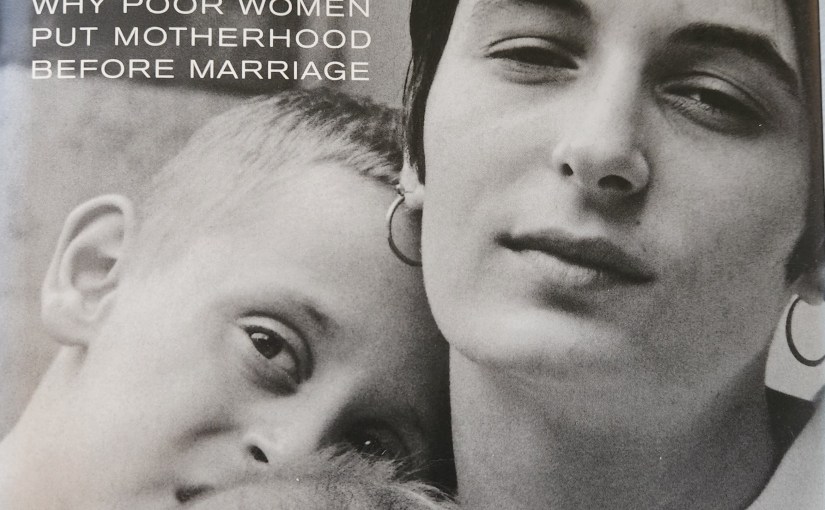
The Color of Water: A Black Man’s Tribute to His White Mother

The Color of Water: A Black Man’s Tribute to His White Mother

By James McBride

Riverhead Books New York 1996 314 pages

Just as the title indicates, this book focuses on McBride’s white Jewish mother who never identified with white people. She loved Black people, married Black men, and was extremely proud of and educated her many Black children who all grew up to be working professionals. It is a fascinating story because you have such deep description of a real person: her history, her words, her actions, her beliefs. It is also heartwarming that an adult male child took such a great interest in the inner world of his mother. His love for her is great and enduring.

There is a short intro where McBride says his mother was “the daughter of an Orthodox Jewish rabbi [who] married a black man in 1942” (xvii). His mother will not reveal where she was from or if she were Black [she was not]. She educated all her children who didn’t even know her maiden name when they were grown.

1  Dead

Whenever the text is in italics it indicates that McBride’s mother is speaking. She begins the narrative with “I’m dead.”: “They want no parts of me and me I don’t want no parts of them.” “I was born an Orthodox Jew on April 1, 1921…in Poland” (1).

Mother says her mother’s name was Rachel Shilsky and “is dead as far as I’m concerned. She had to die in order for me, the rest of me, to live.” “My father’s name was Fishel Shilsky and he was an Orthodox rabbi” (2). When Mother married a Black man they mourned as if she were dead.

2  The Bicycle

The author always thought of his stepfather as Daddy. “He married my mother, a white Jewish woman, when she had eight mixed-race black children, me being the youngest at less than a year old. They added four more children…” “…a stroke, and he was gone” (6).

“Hunter Jordan, my stepfather, was dead. Andrew McBride, my biological father, had died while she was pregnant with me fourteen years earlier.” “The image of her riding that bicycle typified her whole existence to me. Her oddness, her complete nonawareness of what the world thought of her, a nonchalance in the face of what I perceived to be imminent danger from blacks and whites who disliked her for being a white person in a black world. She saw none of it” (8).

“She was the commander in chief of my house, because my stepfather did not live with us.” “Matters involving race and identity she ignored” (9).

“‘C’mon,’ she said, ‘I’ll walk you to the bus stop.’ Surprise reward. Me and mommy alone. It was the first time I remember ever being alone with my mother. 

“It became the high point of my day, a memory so sweet it is burned into my mind like a tattoo, Mommy walking me to the bus stop…” (11).

“Gradually, as the weeks passed and the terror of going to school subsided, I began to notice something about my mother, that she looked nothing like the other kids’ mothers. In fact, she looked more like my kindergarten teacher, Mrs. Alexander, who was white. Peering out the window as the bus rounded the corner and the front doors dlew open, I noticed that Mommy stood apart from the other mothers, rarely speaking to them. She stood behind them, waiting calmly, hands in her coat pockets, watching intently through the bus windows to see where I was, then smiling and waving as I yelled my greeting to her through the window. She’d quickly grasp my hand as I stepped off the bus, ignoring the stares of the black women as she whisked me away.

“One afternoon as we walked home from the bus stop, I asked Mommy why she didn’t look like the other mothers. 

“‘Because I’m not them,’ she said.

“‘Who are you?’ I asked.

“‘I’m your mother.’

“‘Then why don’t you look like Rodney’s mother, or Pete’s mother? How come you don’t look like me?’

By kindergarten McBride sees that his mother looks different than the other mothers. She won’t discuss it.

3  Kosher

Text in italics again. It is a description of the traditions of his mother’s Jewish grandparents.

4  Black Power

“When I asked her if she was white, she’d say, ‘No. I’m light-skinned,’ and change the subject again” (21). There are secrets.

“Yet Mommy refused to acknowledge her whiteness. Why she did so was not clear, but even my teachers seemed to know she was white and I wasn’t. On open school nights, the question most often asked by my schoolteachers was: ‘Is James adopted?’ which always prompted an outraged response from Mommy” (23).

“I thought black power would be the end of my mother” (26).

“Her motto was, ‘If it doesn’t involve your going to school or church, I could care less about it and my answer is no whatever it is.’

“She insisted on absolute privacy, excellent school grades, and trusted no outsiders of either race. We were instructed never to reveal details of our home life to any figures of authority: teachers, social workers, cops, storekeepers, or even friends” (27).

“She and my father brought a curious blend of Jewish-European and African-American distrust and paranoia into our house. On his end, my father, Andrew McBride, a Baptist minister, had his doubts about the world accepting his mixed family” (28).

“…represented the best and worst of the immigrant mentality: hard work, no nonsense, quest for excellence, distrust of authority figures, and a deep belief in God and education. My parents were nonmaterialistic. They believed that money without knowledge was worthless, that education tempered with religion was the way to climb out of poverty in America, and over the years they were proven right.”

“Mommy’s contradictions crashed and slammed against one another like bumper cars at Coney Island. White folks, she felt, were implicitly evil toward blacks, yet she forced us to go to white schools to get the best education. Blacks could be trusted more, but anything involving blacks was probably slightly substandard” (29). 

McBride describes his mother’s personality and society back in 1966. He speaks of civil rights leaders and his mother identifying as Black. McBride always fears that his mother will be hurt by Black people. “The incident confirmed my fears that Mommy was always in danger” (34). 

McBride is always in mortal fear that his mother will be hurt or killed. 

5  The Old Testament

McBride had grandparents and an aunt he never knew. In italics:

“We attracted a lot of attention when we traveled because we were poor and Jewish and my mother was handicapped. I was real conscious of that. Being Jewish and having a handicapped mother. I was ashamed of my mother, but see, love didn’t come natural to me until I became a Christian” (38).

“His marriage was a business deal for him. He only wanted money. That and to be an American. Those were the two things he wanted, and he got them too, but it cost him his family, which he ran into the ground and destroyed” (41).

Mother was sexually abused by her father: “Of course I had something to run from. My father did things to me when I was a young girl that I couldn’t tell anyone about. Such as getting in bed with me at night and doing things to me sexually that I could not tell anyone about. When we’d go to the beach in Portsmouth, he’d get into the water with me, supposedly to teach me how to swim, and hold me real close to his body near his sexual parts and he’d have an erection. When we’d get back to the beach, Mameh would ask, ‘Are you getting better at swimming?’ and I’d say, “Yes, Mameh,’ and he’d be standing there, glaring at me. God, I was scared of him” (42).

“Folks will run with that, won’t they? They’ll say, ‘Oh, she felt low, so she went on and married a nigger.’ Well, I don’t care. Your father changed my life. He taught me about a God who lifted me up and forgave me and made me new. I was lucky to meet him or I would’ve been a prostitute or dead. Who knows what would’ve happened to me. I was reborn in Christ. Had to be, after what I went through” (43). 

6  The New Testament

Mom went to and brought her kids to Black churches. Mom LOVED church.

A little part that reminds me of me: “…about fifteen feet back from the sidewalk, with a sign above the door that was done by a painter who began his lettering without taking into account how little space he had. It read: WHOSOEVER BAPtist Church” (49).

“…like ‘We’ve Come This Far by Faith’ or ‘What a Friend We Have in Jesus,’ she would bow down her head and weep. It was the only time I ever saw her cry. ‘Why do you cry in church?’ I asked her one afternoon after service.

“‘Because God makes me happy.’”’Then why cry?’

“‘I’m crying ‘cause I’m happy. Anything wrong with that?’” (50).

“All my siblings, myself included, had some sort of color confusion at one time or another, but Richie dealt with his in a unique way. As a boy, he believed he was neither black nor white but rather green like the comic book character the Incredible Hulk. He made up games about it and absorbed the character completely into his daily life…”(52).

7  Sam

There is talk of the KKK. In italics: “It seemed to me death was always around Suffolk. I was always hearing about somebody found hanged or floating in the wharf. And we were uneasy too, my family, because in the South there was always a lot of liquor and drinking…” (58).

“They didn’t complain about it. Who would they complain to? The cops? The cops wouldn’t ride back there, you crazy? They were scared to or didn’t want to. But what always struck me about black folks was that every Sunday they’d get dressed up so clean for church I wouldn’t recognize them. I like that. They seemed to have such a purpose come Sunday morning. Their families were together and although they were poor, they seemed happy. Tateh hated black people. He’d call the little children bad names in Yiddish and make fun of their parents, too. ‘Look at them laughing,’ he’d say in Yiddish. ‘They don’t have me in their pocket and they’re always laughing.’ But he had plenty money and we were all miserable. My brother Sam, he couldn’t take it and ran off as soon as he got big enough” (61).

Sam was the author’s uncle. “He didn’t know a soul in Chicago and made it there on his own. Mameh was beside herself with that letter. ‘Write him back,’ she told me. ‘Write him back now and tell him to come home.’ so I did. I wrote Sam and told him to come home, but he never did come home and I never did see him again.

“He joined the army and got killed in World War II, my brother Sam. I didn’t find out what happened to him till long after the fact, when your daddy died in 1957. I had seven kids and was pregnant with you and I called one of my aunts to ask for help and she said, ‘Your brother died in the war.’ I asked her what happened, and she said,’ Stay out of our lives. You’ve been out. Stay out.’ And she hung up on me, so there was nothing I could do for Sam but pray for him” (63).

8  Brothers and Sisters

Stories of what would go on in the house while Mommy was gone. When Helen was 15 she ran away.

9  Shul

When Mom was in grade school nobody liked her for being Jewish. She had one friend, Francis. People were poor, but Mom’s family always had enough to eat. Her dad didn’t mind paying for private tutors.

10  School

“…communicated the sense to us that if we were lucky enough to come across the right Jew in our travels–a teacher, a cop, a merchant–he would be kinder than other white folks. She never spoke about Jewish people as white. She spoke about them as Jews, which made them somehow different.”

“It was in her sense of education, more than any other, that Mommy conveyed her Jewishness to us. She admired the way Jewish parents raised their children to be scholastic standouts, insulating them from a potentially harmful and dangerous public school system by clustering together within certain communities, to attend certain schools, to be taught by certain teachers who enforced discipline and encouraged learning, and she followed their lead” (87-8).

“She invariably chose predominantly Jewish public schools…”

“We grew accustomed to being the only black, or ‘Negro,’ in school and were standout students, neat and well-mannered, despite the racist attitudes of many of our teachers…” (89).

“Ma, what’s a tragic mulatto?” I asked.

Anger flashed across her face like lightning and her nose, which tends to redden and swell in anger, blew up like a balloon. “Where’d you hear that?” she asked.

“I read it in a book.”

“For God’s sake, you’re no tragic mul–What book is this?”

“Just a book I read.”

“Don’t read that book anymore.” She sucked her teeth. “Tragic mulatto. What a stupid thing to call somebody! Somebody called you that?”

“No.”

“Don’t ever ever use that term.”

“Am I black or white?”

“You’re a human being,” she snapped. “Educate yourself or you’ll be a nobody!”

“Will I be a black nobody or just a nobody?”

“If you’re a nobody,” she said dryly, “it doesn’t matter what color you are.”

“That doesn’t make sense,” I said.

She sighed and sat down. “I bet you never heard the joke about the teacher and the beans,” she said. I shook my head. “The teacher says to the class, ‘Tell us about different kinds of beans.’

“The first little boy says, ‘There’s pinto beans.’

“‘Correct,’ says the teacher.

“Another boy raises his hand. ‘There’s lima beans.’

“‘Very good,’ says the teacher.

“Then a little girl in the back raises her hand and says, ‘We’re all human beans!’”

She laughed. “That’s what you are, a human bean! And a fartbuster to boot!” She got up and went back to cooking while I wandered away, bewildered. (92-3)

“The question of race was like the power of the moon in my house. It’s what made the river low, the ocean swell, and the tide rise, but it was a silent power,, intractable, indomitable, indisputable, and thus completely ignorable. Mommy kept us at a frantic living pace that left no time for the problem” (94).

“Now the others began to act out, and the sense of justice and desire for equal rights that Mommy and father had imparted to us began to backfire. Kind, gentle, Sunday school children who had been taught to say proudly, ‘I am a Negro,’ and recite the deeds of Jackie Robinson and Paul Robeson now turned to Malcolm X and H. Rap Brown and Martin Luther King for inspiration. Mommy was the wrong color for black pride and black power, which nearly rent my house in two” (96).

“The extended black family was Mommy’s hole card, and she played it as often as the times demanded because her family was not available to her.”

“I’m dead. They’re dead too by now probably. What’s the difference? They didn’t want me to marry on the black side.”

“But if you’re black already, how can they be mad at you?” (99)

“…and going out with Mommy, which had been a privilege and an honor at age five, had become a dreaded event. I had reached a point where I was ashamed of her and didn’t want to the world to see my white mother. When I went out with my friends, I’d avoid telling her where we were playing because I didn’t want her coming to the park to fetch me. I grew secretive, cautious, passive, angry, and fearful…” (100).

“As I walked home, holding Mommy’s hand while she fumed, I thought it would be easier if we were just one color, black or white. I didn’t want to be white. My siblings had already instilled the notion of black pride in me. I would have preferred that Mommy were black. Now, as a grown man, I feel privileged to have come from two worlds. My view of the world is not merely that of a black man but that of a black man with something of a Jewish soul. I don’t consider myself Jewish, but when I look at Holocaust photographs of Jewish women whose children have been wrenched from them by Nazi soldiers, the women look like my own mother and I think to myself, There but for the grace of God goes my own mother–and by extension, myself. When I see two little Jewish old ladies giggling over coffee at a Manhattan diner, it makes me smile, because I hear my own mother’s laughter beneath theirs. Conversely, when I hear black ‘leaders’ talking about ‘Jewish slave owners’ I feel angry and disgusted, knowing that they’re inflaming people with lies and twisted history, as if all seven of the Jewish slave owners in the antebellum South, or however few there were, are responsible for the problems of African-Americans now. Those leaders are no better than their Jewish counterparts who spin statistics in marvelous ways to make African-Americans look like savages, criminals, drags on society, and ‘animals’ (a word quite popular when used to describe blacks these days). I don’t belong to any of those groups. I belong to the world of one God, one people. But as a kid, I preferred the black side, and often wished that Mommy had sent me to black schools like my friends. Instead I was stuck at that white school, P.S. 138, with white classmates who were convinced I could dance like James Brown. They constantly badgered me to do the ‘James Brown’ for them, a squiggling of the feet made famous by the ‘Godfather of Soul’ himself, who back in the sixties was bigger than life. I tried to explain to them that I couldn’t dance. I have always been one of the worst dancers that God has ever put upon this earth. My sisters would spend hours at home trying out new dances to Archie Bell and the Drells, Martha Reeves, King Curtis, Curtis Mayfield, Aretha Franklin, and the Spinners” (104).

Problems with color out in society.

11  Boys

If there was one thing Tateh didn’t like more than gentiles, it was black folks. And if there was one thing he didn’t like more than black folks in general, it was black men in particular. So it stands to reason that the first thing I fell in love with in life was a black man. I didn’t do it on purpose. I was a rebellious little girl in my own quiet way, but I wasn’t so rebellious that I wanted to risk my own life or anybody else’s life. They would kill a black man for looking at a white woman in the South in those days. They’d hang him. And the girl, they’d run her out of town” (107).

“I was never asked out for a date by anyone in school. I loved to dance and had long legs, and I once auditioned for a dance musical at school and made it, but some of the girls made such a fuss over having to dance next to a Jew that I dropped out of it. During gym class when we’d pick tennis partners, the girls would pick and pick until I’d be standing alone. If Frances wasn’t around, I wouldn’t get picked. I’d like to say I didn’t care about my classmates, and what they thought of me” ((108).

“None of the boys in school would even bother with me. So after a while I had me my own friend, and he didn’t care that I wore secondhand clothes or was Jewish. He never judged me. That’s the first thing I liked about him, in fact that’s what I liked about black folks all my life: They never judged me.”

“I loved that boy to death and he loved me. At least, I thought he did. Who cared that he was black? He was the first man other than my grandfather who ever showed me any kindness in my life, and he did it at the risk of his own because they would’ve strung him up faster than you can blink if they’d have found out. Not us the Ku Klux Klan but the regular white folks in town would’ve killed him. Half of them were probably the Klan anyway, so it was all the same. You know death was always around Suffolk, always around. It was always so hot, and everyone was so polite, and everything was all surface but underneath is was like a bomb waiting to go off. I always felt that way about the South, that beneath the smiles and southern hospitality and politeness were a lot of guns and liquor and secrets. A lot of those secrets ended up floating down the Nansemond River just down the road from us. Folks would go down to the wharf and throw out nets for crabs and turtles and haul in human bodies. I remember one of our customers, Mrs. Mayfield, they found her son out there, he wasn’t more than seventeen or so. He’d been killed and tied to a wagon wheel and tossed into the wat until he drowned or the crabs ate him. You know a crab will eat anything. You have never seen me eat a crab to this day and you never will.”

“Well, Peter and I were having our regular little secret rendezvous, carefully arranged. We’d meet in the yard or the passage behind the store, or he’d write a note and slip it to me secretly. If the store was closed he’d slide the note under the front door. On the Sabbath, Friday nights, it was a thrill for me to pretend I was going downstairs to the kitchen and then creep into the store to pick up the torrid love notes he slipped under the door. He would pledge his love for me no matter what and write out the plan for our secret meeting. At the appointed time he’d come by and pick me up in a car and I’d get into the back seat and lie flat so I wouldn’t be seen. He had friends that lived out in the country in isolated areas, and that’s where we would be together.

“You know, my whole life changed after I fell in love. It was like the sun started shining on me for the first time, and for the first time in my life I began to smile. I was loved, I was loved, and I didn’t care what anyone thought. I wasn’t worried about getting caught, but I did notice that Peter’s friends were terrified of me; they stayed clear anytime I came near them. They’d walk away from me if they saw me walking down the road coming toward them, and if they came into the store, they wouldn’t even look at me. That started to worry me a little but I didn’t worry much. Then after a while, my period was late. By a week.

“Then another two weeks.

“Then it never came.

“Well, the whole thing just started to unravel on me then. I was pregnant and couldn’t tell a soul. The white folks would have killed him and my father would have killed him. I had maybe just turned fifteen then. There wasn’t a person I could tell. I’d wake up in bed in a sweat, and go outside to the back balcony to hide my tears from my sister. I did consider telling Frances, but that was too much to ask. This was 1936. I mean, what I did was way, way out as far as white folks were concerned” (112).

“You know, the thing was, I was supposed to be white and ‘number one,’ too. That was a big thing in the South. You’re white, and even if you’re a Jew, since you’re white you’re better than a so-called colored. Well, I didn’t feel number one with nobody but him, and I didn’t give a hoot that he was back. He was kind! And good! I knew that! And I wanted to tell folks that, I wanted to shout out, ‘Hey y’all, it really doesn’t matter!’ I actually believed folks would accept that, that they’d see what a good person he was and maybe accept us, and I went through a few days of thinking this, after which I told him one night, ‘Let’s run off to the country and get married,’” (113-4).

Momma was never liked by the boys until one black boy came along. He was nicer to her than anyone and they fell in love. 1937. She got pregnant and didn’t know what to do. This could cost them their lives.

12  Daddy

“His name was Hunter Jordan, Sr., and he raised me as his own son.

“As a small boy, I was never quite aware of the concept of ‘father’” (117).

“He married her and made the baseball team his own, adding four more kids to make it an even twelve. He made no separation between the McBride and Jordan children, and my siblings and I never thought of or referred to each other as half brothers and sisters; for the powerless Little Kids, myself included, he was ‘Daddy.’ For the midlevel executives, he was sometimes ‘Daddy,’ sometimes ‘Mr. Hunter’” (118).

“His father was a black man, a railroad brakeman, and his mother a Native American, so he had a lot of Indian in his face: brown skin, slanted brown eyes, high cheekbones, and a weather-beaten outdoor look about him, a very handsome dude” (120).

James had a pretty great stepdad who eventually died of a stroke.

13  New York

“My mother knew I was pregnant and in trouble” (129).

“She just went about it in that matter-of-fact way my mother’s family did things. She made a few phone calls, found a Jewish doctor in Manhattan, and took me to his office, where I had an abortion. It was a horrible, painful experience and the doctor used no anesthesia” (134).

Just as Momma’s family was neither immigrant nor American, Mommy was neither black nor white. (In her soul she was black.)

14  Chicken Man

When James’s stepfather died both he and his mom lost it. James drops out of school. He begins smoking weed and stealing.

“It did not help. My friends became my family, and my family and mother just became people I lived with” (140).

“I was numb. I felt I was getting back at the world for injustices I had suffered, but if you sat me down and asked me which injustices I was talking about, I wouldn’t have been able to name them if my life depended on it…I had no feelings. I had smothered them. Every time they surged up, I shoved them back down inside me the way you stuff clothing in a drawer and shut it. Reefer and wine helped me to forget any pain, and as the pain and guilt increased, my problems with drugs worsened” (142).

“The men did not seem to be afraid of the police, nor did they dislike them. Their lives just seemed complete without the white man. I liked that. Their world was insular, away from the real world that I was running from. They called me ‘New York’…I turned fifteen on the Corner but could act like I was twenty-five, and no one cared. I could hide. No one knew me. No one knew my past, my white mother, my dead father, nothing. It was perfect. My problems seemed far, far away” (147).

“‘And nobody’ll give a damn neither!’ Chicken Man snapped. ‘Everybody on this corner is smart. You ain’t no smarter than anybody here. If you so smart, why you got to come on this corner every summer? ‘Cause you flunkin’ school! You think if you drop out of school somebody’s gonna beg you to go back? Hell no! They won’t beg your black ass to go back. What makes you so special that they’ll beg you! Who are you? You ain’t nobody! If you want to drop out of school and shoot people and hang on this corner all your life, go ahead. It’s your life” (150)!

James is getting a taste of true street life.

15  Graduation

After Moma aborted Peter’s baby in high school, she moved away for a year. During that time peter got another girl pregnant. Mama’s heart was broken.

“Oh, that messed me up. I told him I didn’t want to see him anymore and walked back through the black neighborhood, into the store, and went upstairs and cried my heart out, because I still loved him. I went through this entire ordeal and here he was getting busy with somebody else. The fact that he was black and the girl he was marrying was black–well, that hurt me even more. If the world were fair, I suppose I would have married him, but there was no way that could happen in Virginia. Not in 1937” (154). 

Mom’s father never cared for Mom’s mom.

“I wasn’t going to have an arranged marriage like my parents did. I’d rather die first, which I did do in a way, because I lost my mother and sister when I left home” (155).

Moma’s Jewish father forbid her to go into the Protestant church for her graduation ceremony. Mama left the next day for N.Y.C.

16  Driving

James begins to turn around although he was still seeking solace in drugs in order to distance himself from his mother’s suffering.

“I wanted to give up weed, but I couldn’t. Weed was my friend, weed kept me running from the truth. And the truth was my mother was falling apart.

“Looking back, I see it took about ten years for Mommy to recover from my stepfather’s death. It wasn’t just that her husband was suddenly gone, it was the accumulation of a lifetime of silent suffering, some of which my siblings and I never knew about. Her past had always been a secret to us, and remained so even after my stepfather died, but what she had left behind was so big, so complete that she could never entirely leave it: the dissipation of her own Jewish family, the guilt over abandoning her mother, the separation from her sister, the sudden, tragic death of his first husband, whom she adored. While she never seemed on the verge of losing her mind, there were moments when she teetered close to the edge, lost in space. Even in my own self-absorbed funk, I was worried about her, because as my siblings and I slowly got to our emotional feet, Mommy staggered about in an emotional stupor for nearly a year. But while she weebled and wobbled and leaned, she did not fall. She responded with speed and motion. She would not stop moving. She rode her bicycle. She walked” (163).

“…her Orthodox Jewish ways had long since translated themselves into full-blown Christianity. Jesus gave Mommy hope. Jesus was Mommy’s salvation. Jesus pressed her forward. Each and every Sunday, no matter how tired, depressed, or broke, she got up early, dressed in her best, and headed for church. When we kids grew too old and big for her to force us to go, she went alone, riding the F train from Queens to Brooklyn to New Brown Memorial, the church she started with my father. Church revived her, filled her up, and each Sunday she returned a little more renewed, until that Saturday afternoon she announced she was going to drive my stepfather’s car” (165).

“Rachel Deborah Shilsky could drive a car and pull a trailer behind it, but Ruth McBride Jordan had never touched a steering wheel before that day in 1973, and you can make book on it” (168).

17  Lost in Harlem

“I don’t know what drew me there–maybe because I’d lived around black folks most of my life, or because I’d heard so much about it. In those days, nobody in New York City went to the Village to have fun. Harlem was the place. White and black came to Harlem to party. There weren’t heavy drugs and crime like there is now. It was different. People were flowing up to Harlem in droves, from the South, from Chicago, from everyplace. Harlem was like magic” (171).

“Nobody would hire me. Why would a white girl hang around Harlem unless she was up to something bad” (172)?

“I would stay in the little room he rented for me for a few days, then go back to Bubeh’s, then go back there to my little room again. Bubeh was getting very suspicious now, but she was very old then, she slept a lot, you know, and she had diabetes, and I got over on her the way my grandkids get over on me now. I told her anything, you know, and after a while it got so that I couldn’t see my grandmother anymore and keep doing what I was doing, hanging out in Harlem. I had to break away and not go back home to her, because Bubeh reminded me too much of what I was and where I came from. I needed to move into Harlem completely and make enough money to stay there and e cool and wear the fancy dresses and the clothes. So one day I asked Rocky, ‘When do I get to make money like your other girls?’ I knew what I was saying. I wasn’t blind. But what was love to me? What did I know about love? And sex? I wanted to be swinging, but Rocky said, ‘You’re not ready to get out there yet. I’ll tell you when you’re ready’” (175).

If Mama hadn’t had friends looking out for her she likely would have become a prostitute. She returns to her grandmother’s. 

18  Lost in Delaware

Moving.

“In June 1974, Mommy walked into the kitchen of our house in Queens and said, ‘We’re moving to Delaware. Pack up the house.’ She had five kids at home and seven who were away at college” (177).

“My mother is the only individual I know who can fall asleep instantly for two minutes–deep REM sleep, complete with snoring–only to be awakened instantly by certain select noises” (178).

Culture shock: “…the promised land of Macy’s, Gimbels, and Ohrbach’s, entertaining them for free at museums, parades, block parties, and public concerts, Wilmington was a land of suburban shopping malls, high school marching bands, blond prom queens, small-town gossip, and an inner city from which whites were fleeing as fast as their Ford Pintos could take them. We were shocked by the racial division of the city and surrounding county, where most of the black kids attended understaffed and underfunded city schools while whites attended sparkling clean suburban schools with fantastic facilities. The segregated schools came as a complete surprise to Mommy, who had not even considered that problem, and the southern vibe of the city–anything south of Canal Street in Manhattan was the South to us–brought back unpleasant memories for Mommy. She hates the South” (180).

“But mommy did not have that insight, and from that moment on she hated Delaware. ‘We’re really moving back to new york now,’ she said” (181).

We see James’s life changing in Deleware and how he feels about white people.

“It hurt me a little bit to stand there and lie. Sometimes it seemed like the truth was a bandy-legged soul who dashed from one side of the world to the other and I could never find him” (187).

“She had few friends there. The black folks found her to be awkward. The white folks bored her. But there was no quick and easy escape.

“College was my way out. My eldest brother’s wife, Becky, had gone to Oberlin College in Ohio and she told me I should apply because they had a great liberal ars school, a conservatory of music, and most of all, scholarship money. My high school grades were sour, my SATs low, but my musical and writing abilities were strong and I had good recommendations” (188).

A sad parting from Mama as James leaves for college. This is her eighth child in a row to go to college.

19  The Promise

Dennis the violinist.

…Aunt Mary’s leather factory and we started going out, he brought me by there and said, ‘I want y’all to meet a friend of mine,’ and their eyes kind of popped out when I walked into the room.

This was around 1940 and black and white didn’t do what me and Dennis were doing, walking around and such. Some folks did it, but it was all secret, or they were good-time, partying folks like Rocky’s friends at Small’s Paradise. But Dennis was a Christian man and a serious man and so were his friends. This was no joking matter to them.”

“She was the grandchild of slaves. When I first came to North Carolina and walked into her house, she said, ‘I just hope you excuse me for looking at you so hard, because I’ve never had a white person in my house before, and I’ve never been this close to a white person before.’ And I said, ‘All right,’ and she was my friend till she died. I’ll never forget her as long as I live. She lived to be nearly a hundred. We wouldn’t have made it without Aunt Candis. She came up from North Carolina and cared for y’all after Dennis died, because I was grieving and lost and I couldn’t move. I couldn’t move. She took the train all the way up to New York from North Carolina and took care of all eight of you, including you, James, and you weren’t but a tiny child. She had never been to the city before. She’d never seen so much cement and so many tall buildings in her life. Your stepfather, he bought her a big gold watch after he married me and she left to go home to North Carolina. He said, ‘That’s some woman,’ and he was right. She was some woman” (195).

“So I did my own thing. I moved in with Dennis and I didn’t regret it. He continued to work for my Aunt Mary while I was living with him, and she never knew it” (196).

A father she grew up with but never really knew.

“She tried to ignore that, too, as long as she could, and I don’t think she knew for a while because Tateh was always a little strange anyway, you know, and secretive. He never told us anything, like where he was born, or if he had any family or relatives. Every summer he’d disappear for a few weeks to Europe. He’d say, ‘I’m going to see my landsman,’ and off he’d go on a steamer to France someplace. ‘Landsman’ in Jewish is somebody from your hometown. We’d run the store in his absence, me, Dee-Dee, and Mameh. To this day I don’t know exactly where he went, but a few weeks later he’d strut into the store, put down his bags, and say, ‘Where’s my money?’ We’d give it to him and he’d sit down and count it. Even before he took off his jacket, he’d count his money. He knew just how much he was supposed to earn a week, more or less. He was serious about his money.”

…say our prayers to begin the Sabbath, and Tateh would pack a bag of groceries and throw them in his car while Mameh watched him. He’d say to her in Yiddish, ‘I’m going out.’ Then he’d say to me in English, ‘I won’t be back till Monday. Open up the store Sunday morning.’” (198).

Mama’s parents getting divorced and how hard it was on the family.

20  Old Man Shilsky

As a young adult in Boston facing prejudice. Learning about his grandfather; not a pretty picture.

“‘Well…he just disliked black folks. And he cheated them. Sold ‘em anything and everything and charged ‘em as much as he could. If you owed him five dollars he’d make you pay back ten. He shot ol’ Lijah Ricks in the stomach. Lijah brought that on himself though, went in the Shilskys’ store fussin’ over some sardines and crackers and wouldn’t pay. Shilsky shot him in the left or right side, I can’t remember which. He didn’t kill him, but he was a hateful one, Old Man Shilsky. His own wife was scared of him’” (209).

James goes to Suffolk where his mom grew up. It is difficult to hear more stories of his mean ol’ grandpa.

21  A Bird Who Flies

“There was no life in Suffolk for me. I packed what few things I wanted and tried to talk to Dee-Dee before I left, but she wouldn’t talk to me. ‘You promised you wouldn’t go,’ she said, and she walked away from me. As I left the store to walk downtown to the bus station, Mameh handed me a bag lunch and kissed me and I was out the door and gone. I never saw her or Dee-Dee ever again. Tateh didn’t say a word to me as I walked out” (214).

“I began to yell at him and we argued. Here he was having divorced Mameh and he was still using her against me. Then he said, ‘I know you’re gonna marry a shvartse. You’re making a mistake.’ That stopped me cold, because I didn’t know how he learned it. To this day I don’t know. He said, ‘If you marry a nigger, don’t ever come home again. Don’t come back’” (215).

…he heard Aunt Mary say that my mother was sick and had been brought up to a hospital in the Bronx. I right away went out and called Aunt Mary and asked if she knew where Mameh was. She said, ‘You’re out of the family. Stay out. We sat shiva for you. You can’t see her.’ Well, that just hurt me to the bone. That night I told Dennis, ‘I’ve got to see her.’ He said, ‘Ruth, your aunt Mary made it clear that you’re not welcome up there’” (216). 

“That’s why she gave me that passport. I’ve always held that to this day, that guilt, that I left Mameh, because all her life I was the one who translated for her and helped her around. I was her eyes and ears in America, and when I left…well, Sam had gone, and Bubeh had died, and her husband treated her so bad and divorced her, and her reasons for living just slipped away. It was a bad time” (217). 

The story of when grandpa died.

22. A Jew Discovered

Interactions with white Jews: “Like most of the Jews in Suffolk they treated me very kindly, truly warm and welcoming, as if I were one of them, which in an odd way I suppose I was. I found it odd and amazing when white people treated me that way, as if there were no barriers between us. It said a lot about this religion–Judaism–that some of its followers, old southern crackers who talked with southern twangs and wore straw hats, seemed to believe that its covenants went beyond the color of one’s skin. The Sheffers, Helen Weintraub, the Jaffes, they talked to me in person and by letter in a manner and tone that, in essence, said ‘don’t forget us. We have survived here. Your mother was part of this…’” (224).

“The Shilskys kept to themselves. Your Uncle Sam, he joined the air force and got killed in a plane crash in Alaska” (226).

“The Shilskys were gone. Long gone” (228). 

“It suddenly occurred to me that my grandmother had walked around here and gazed upon this water many times, and the loneliness and agony that Hudis Shilsky felt as a Jew in this lonely southern town–far from her mother and sisters in New York, unable to speak English, a disabled Polish immigrant whose husband had no love for her and whose dreams of seeing her children grow up in America vanished as her life drained out of her at the age of forty-six–suddenly rose up on my blood and washed over me in waves. A penetrating loneliness covered me, lay on me so heavily I had to sit down and cover my face. I had no tears to shed. They were done long ago, but a new pain and a new awareness were born inside me. The uncertainty that lived inside me began to dissipate; the ache that the little boy who stared in the mirror felt was gone. My own humanity was awakened, rising up to greet me with a handshake as I watched the first glimmers of sunlight peek over the horizon. There’s such a big difference between being dead and alive, I told myself, and the greatest gift that anyone can give anyone else is life. And the greatest sin a person can do to another is to take away that life. Next to that, all the rules and religions in the world are secondary; mere words and beliefs that people choose to believe and kill and hate by. My life won’t be lived that way, and neither, I hope, will my children’s. I left New York happy in the knowledge that my grandmother had not suffered and died for nothing.

23  Dennis

In 1942 Dennis and I were living in a room in the Port Royal on 129th Street between Seventh and Eighth Avenues, and one night after work I walked into the hallway of our building and this black woman punched me right in the face. She hit me so hard I fell to the floor. ‘Don’t disrespect me!’ she said. She was a raving lunatic. I never even knew who she was. I somehow got off the floor and she chased me up to our room and I slammed the door on her and waited for my husband to get home. Dennis went to speak to her when he got home from work. ‘That white woman don’t belong here,’ she said. That’s what she told him. Dennis didn’t attack her. He just said, ‘Leave my wife alone,’ and she did. Even though we were not married, we considered ourselves husband and wife.

Some black folks never did accept me. Most did, but there were always a few running around saying ‘Nubian this’ and ‘Nubian that’ and always talking bout Africa and all this. Well, I’m a mother of black children, and nobody will ever deny me my children, and they can put that in their Nubian pipe and smoke it. All this Nubian. If you want to go back to Africa, James, well, you can go. I don’t see the point in your going when you have your family here. But if you feel you want to go to Africa to find your roots I won’t stop you. I’ll still be your mother when you come back. And you’ll still be my son.

There was no turning back after my mother died. I stayed on the black side because that was the only place I could stay. The few problems I had with black folks were nothing compared to the grief white folks dished out. With whites it was no question. You weren’t accepted to be with a black man and that was that. They’d say forget it. Are you crazy? A nigger and you? No way. They called you white trash. That’s what they called me. Nowadays these mixed couples get on TV every other day complaining, ‘Oh, it’s hard for us.’ They have cars and televisions and homes and they’re complaining. Jungle fever they call it, flapping their jaws and making the whole thing sound stupid. They didn’t have to run for their lives like we did. Me and Dennis caused a riot on 105th Street once. A bunch of white men chased us up the street and surrounded Dennis and tried to kill him, throwing bottles and hitting and kicking him until one of them made the rest of them stop. He said, ‘Get out of here while you can!’ and we ran for it. See, most interracial marriages did not last. That’s what Dennis would say when we argued. I’d say, ‘I’m leaving,’ and he’d say, ‘Go ahead. Go ahead. That’s what people want us to do. That’s what they expect.’ And he was right” (231-2).

Dennis was a deacon and he sang in the church choir. And it was a mighty, mighty choir too. What a time it was. Those were my glory years” (234).

“All his friends from North Carolina who lived in Harlem would come see him. They’d holler up to our window. ‘Dennis…Denis!’ and he’d invite them in and give them our last food or the shirt off his back if they asked. He came from a home where kindness was a way of life. I wanted to be in this kind of family. I was proud to join it, and they were happy to have me.”

“There were a lot of stares and whispering and pointing and silly questions when we went to the marriage bureau to get our license. The clerks were very nasty and no one wanted to write up our paperwork, but we didn’t let those fools ruin our marriage. We got the license and Rev. Brown married us in his private office at the church. I had told him the truth about me and Dennis not really being married and he said, ‘Don’t worry. I’ll marry you and be quiet about it.’” (236).

“‘We have to be strong. You know what people will say about us, Ruth. They’ll try to break us up.’ I said, ‘I know. I’ll be strong,’ and over the years we were tested, but we never split up or even spent a night apart except when he took the kids to North Carolina to see his parents. I never could go south with him because of the danger. The first time I went south with him was the last time, when I took his body down there to bury him” (237).

“Our family grew so fast, before I knew it me and Dennis and four kids were cramped in that one room. So we applied to get an apartment in the Red Hook Housing Projects in Brooklyn” (239).

“I loved that man. I never missed home or my family after I got married. My soul was full.”

“With his little salary, we could barely afford to feed our kids–we had gone from four kids to five to six to seven. I mean, after a while they just dropped like eggs and we loved having them…” (240).

Prejudice is experienced even in life-or-death situations.

“A sinking feeling like I was going right down into blackness. The children woke up and they were huddled together crying and I started to cry. Part of me died when Dennis died. I loved that man more than life itself and at times I wished the good Lord would have taken me instead of him, because he was a much better person for living than me. He just had so much more to give the world than me. He brought me new life. He revived me after I left my family, brought me to Jesus, opened my eyes to a new world, then passed on himself. Lord, it was hard. Very hard to let him go. I was angry at him for dying for a while afterwards, angry that he left me with all those kids, but more than that, I missed him” (244).

“I was thirty-six then and had been with Dennis nearly sixteen years and I’d never functioned without him” (245). 

I was on my own then, but I wasn’t alone, because like Dennis said, God the Father watched over me, and sent me your stepfather, who took over and he saved us and did many, many things for us He wasn’t a minister like Dennis. He was different, a workingman who had never been late for work in the thirty years that he worked for the New York City Housing Authority, and he was a good, good man. I met him after you were born and after a while he asked me to marry him, and Aunt Candis said, ‘Marry that man, Ruth. Marry him!’ and she’d clean the house spotless and cook up these splendid meals when your stepfather came by, to make me look good. He thought I was making up those tasty yams and pork chips and I can’t cook to save my life. When I told him the truth, he said it didn’t matter, that he wanted to marry me anyway, even though his brothers thought he was crazy. I had eight children! But I wasn’t ready to marry. I turned him down three times. I took you down to North Carolina to show you to Dennis’s parents, Etta and Nash, in late ‘57–they only lasted four or five years after their only child died–and when I told Grandma Etta I was thinking of marrying again, she said, ‘God bless you, Ruth, because you’re our daughter now. Marry that man.’ That’s how black folks thought back then. That’s why I never veered from the black side. I would have never even thought of marrying a white man. When I told your stepfather about how my sister and Aunt Betts treated me, he spoke about them without bitterness or hate. ‘You don’t need them to help you,’ he said. ‘I’ll help you for the rest of my life if you’ll marry me,’ which I did, and God bless him, he was as good as his word” (246-7).

The story of Daddy Dennis dying and how the stepfather took over a family of eight kids.

Chapter 24: New Brown

New Brown in the Red Hook Housing Projects. “This is Mommy’s home church. This is the church where I got married. This is the church my father Andrew McBride built” (250).

“He left behind no insurance policy, no dowry, no land, no money for his pregnant wife and young children, but he helped establish the groundwork for Ma’s raising twelve children which lasted thirty years–kids not allowed out after five o’clock; stay in school, don’t ever follow the crowd, and follow Jesus–and as luck, or Jesus, would have it, my stepfather helped Mommy enforce those same rules when he married her. The old-timers at New Brown used to say god honored Rev. McBride. The man died without a penny, yet his children grew up to graduate from college, to become doctors, professors, teachers, and professionals all. It was the work, they said, of none other than Jesus Christ Himself” (251).

This is what extraordinary mothers and fathers can do.

Living in certain past memories while avoiding others:

“For years, Mommy rarely talked about my father. It was as if his death was so long ago that she couldn’t remember; but deep inside she saw her marriage to him as the beginning of her life, and thus his death as part of its end, and to reach any further beyond that into her past was to go into hell, an area that she didn’t want to touch. In order to steer clear of the most verboten area, the Jewish side, she steered clear of him as well. Her memory was like a minefield, each recollection a potential booby trap, a Bouncing Bettery–the old land mines the Viet Cong used in the Vietnam War that never went off when you stepped on them but blew you to hell the moment you pulled your foot away” (253).

How Mom morphed into the new era of New Brown Church.

Chapter 25: Finding Ruthie

“‘No way, I spent all my life running from the South. Don’t put me in the South.’

‘Okay. New York,’ I said. ‘You lived there forty years. You still love New York.’

‘Too crowded,’ she sniffed. ‘They bury them three deep in New York. I don’t want to be smushed up under somebody when I’m buried.’

‘Where should we bury you then?’

“She threw up her hands. ‘Who cares?’”

“Doctors found squamous cell cancer in a small mole they removed from Ma’s face, a condition caused by too much exposure to the sun. Ironically, it’s a condition that affects mostly white people. To the very end, Mommy is a flying compilation of competing interests and conflicts, a black woman in white skin, with black children and a white woman’s physical problem” (260).

Identity issues for James

If it takes as long to know Jesus as it took to know you, I think, I’m in trouble. It took many years to find out who she was, partly because I never knew who I was. It wasn’t so much a question of searching for myself as it was my own decision not to look. As a boy I was confused about issues of race but did not consider myself deprived or unhappy. As a young man I had no time or money or inclination to look beyond my own poverty to discover what identity was. Once I got out of high school and found that I wasn’t in jail, I thought I was in the clear. Oberlin College was gravy–all you could eat and no one telling you what to do and your own job to boot if you wanted one. Yet I laughed bitterly at the white kids in ragged jeans who frolicked on the camps lawn tossing Frisbees and went about campus caroling in German at Christmas. They seemed free in ways I could not be. Most of my friends and the women I dated were black, yet as time passed I developed relationships with white students as well, two of whom,–Leander Bien and Laurie Weisman–are close friends of mine today. During the rare, inopportune social moments when I found myself squeezed between black and white, I fled to the black side, just as my mother had done, and did not emerge unless driven out by smoke and fire. Being mixed is like that tingling feeling you have in your nose just before you sneeze–you’re waiting for it to happen but it never does. Given my black face and upbringing it was easy for me to flee into the anonymity of blackness, yet I felt frustrated to lie in a world that considers the color of your face an immediate political statement whether you like it or not. It took years before I began to accept the fact that the nebulous ‘white man’s world’ wasn’t as free as it looked; that class, luck, religion all factored in as well; that many white individuals’ problems surpassed my own, often by a lot; that all Jews are not like my grandfather and that part of me is Jewish too. Yet the color boundary in my mind was and still is the greatest hurdle. In order to clear it, my solution was to stay away from it and fly solo” (261-2). 

“…I wore my shirt and tie like an imposter. I wandered around the cities by day, stumbling into the newsroom at night, exhausted, to write my stories. I loved an empty city room, just the blinking terminals and a few deadbeats like myself. It was the only time I could write, away from white reporters, black reporters, away from the synergy of black and white that was already simmering inside my soul, ready to burst out at the most inopportune moments. Being caught between black and white as a working adult was far more unpleasant than when I was a college student. I watched as the worlds of blacks and whites smashed together in newsrooms and threw off chunks of human carnage that landed at my feet. I’d hear black reporters speaking angrily about a sympathetic white editor and I’d disagree in silence. White men ruled the kingdom, sometimes ruthlessly, finding clever ways to gut the careers of fine black reporters who came into the business full of piss and vinegar, yet other white men were mere pawns like myself. Most of my immediate editors were white women, whom I found in general to be the most compassionate, humane, and often brightest in the newsroom, yet they rarely rose to the top–even when compared to their more conservative black male counterparts, some of whom marched around the newsrooms as if they were the second coming of Martin Luther King, wielding their race like baseball bats” (263).

“It was a devastating realization, coming to grips with the fact that all your life you had never really known the person you loved the most. Even as a young boy I was used to Mommy hiding her past, and I grew to accept it, and the details of her past got lost as my own life moved forward, which is probably how she wanted it anyway. I never even seriously broached the subject with her until 1977, when I was in college and had to fill out a form that for some reason or other required Ma’s maiden name. I called her long-distance, in Philadelphia, to find out, and she was suddenly evasive” (266). 

“I felt like a Tinkertoy kid building my own self out of one of those toy building sets; for as she laid her life before me, I reassembled the tableau of her words like a picture puzzle, and as I did, so my own life was rebuilt.

“Mommy has changed, changed from the time she adopted Christianity back in the 1940s. What’s different is that she can face the past now. After years of saying, ‘Don’t tell my business,’ she reached a point where she now says, ‘It doesn’t matter. They’re all dead now, or in Florida,’ which in her mind is the same as being dead. ‘I’ll never retire to Florida,’ she vowed. Riding past a graveyard one day, she looked over and remarked, ‘That’s Florida Forever.’

“Ma settled in to get her college degree in social work from Temple University at age sixty-five. She enjoyed the intellectual back-and-forth, the study, reading different authors–I’d forgotten how bright she was. The constant learning and yearning for knowledge was what helped her finally move away from the bustle of Philadelphia to settle into the quieter, safer suburb of Ewing with my sister Kathy. For a few years, she used her degree to work as a volunteer in a Philadelphia social service agency that helped pregnant, unwed mothers; then she moved on to run a weekly reading group for literate and illiterate senior citizens at the local Ewing library, which she still does today. But that’s not enough to keep her busy. Every day she rises, spirits her two grandchildren off to school and drives around central New Jersey, haggling with merchants at flea markets, taking yoga classes in sweats and Nikes, tooling along in a 1995 Toyota at twenty-seven miles an hour in a fifty-five-mile-an-hour zone, holding up traffic on Route 1 listening to Bernard Maltzer on WOR-AM or the Howard Stern show. (‘Grandma laughs when Howard Stern talks dirty,’ my niece Maya whispers.) Sometimes she’ll get up in the morning and disappear for days at a time, slipping away to her old stomping grounds, the Red Hook Housing Projects, to go to church and see her old friends there. She loves Red Hook. Despite the fact that my siblings often urge her to stay out of the projects, she won’t. ‘Don’t tell me how to live,’ she says. She’s always been slightly out of control, my mother, always had the unnerving habit of taking the ship into the air to do loops and spins, then fleeing the cockpit screaming, ‘Someone do something, we’re gonna crash!’ then at the last dying second slipping into the pilot’s seat and coolly landing the thing herself, only to forget the entire incident instantly. She wouldn’t recall it for you if you showed her pictures of herself doing it. She wipes her memory instantly and with purpose; it’s a way of preserving herself. That’s how she moves. Her survival instincts are incredible, her dances with fire always fun to watch. ‘Ruthie,’ my sisters affectionately called her. ‘Ruthie’s crazy’” (271).

“Like any family we have problems, but we have always been close. Through marriage, adoptions, love-ins, and shack-ups, the original dozen has expanded into dozens and dozens more–wives, husbands, children, grandchildren, cousins, nieces, nephews–ranging from dark-skinned to light-skinned; from black kinky hair to blond hair and blue eyes. In running from her past, Mommy has created her own nation, a rainbow coalition that descends on her house every Christmas and Thanksgiving and sleeps everywhere–on the floor, on rugs, in shifts; sleeping double, triple to a bed, ‘two up, three down,’ just like old times” (277).
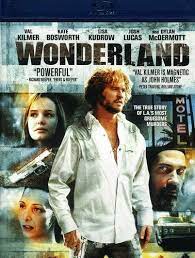
Wonderland: Movie Review

Wonderland  2003  Rated R  1 hour 44 minutes  

Lion’s Gate Home Entertainment

Takes place in the summer of 1981. Laurel Canyon’s Wonderland Avenue was the scene of grisly murders. Porn star John Holmes was a prime suspect.

Actors:  Val Kilmer (John Holmes), Kate Bosworth (Dawn Schiller), Lisa Kudrow (Sharon Holmes), Josh Lucus (Ron Launias), Dylan McDermott (David Lind), Eric Bogosian (Eddie Nash), Carrie Fisher (Sally Hansen), Geneane Garofalo (Joy Miller). 

Directed by James Cox

For quite a while I have recognized that I have a harder time deciphering movies that employ multiple timelines that flashback, roll forward, land in real-time, roll forward, real-time, flashback…ey, yi, yi. Not only that, the story is told from two, at times three, points of view. Each point of view has a different take on what actually went down. Some people are lying and some people are telling the truth. Some characters are doing both. At movie time it is as if my mind goes into relaxation mode and multiple timelines make me work harder than I want. It’s irritating, but that’s just me. Give me a chronological tale anytime. So, when it comes to the 2003 movie Wonderland the cards were already stacked against it for my particular tastes. Four people were actually murdered in 1981 in Laurel Canyon. This makes me think of the Manson murders which are actually referenced when one of the detectives says the place was one of the most horrific crime scenes he’d witnessed in his entire career. That is where the comparison ends since there is no mastermind or brainwashing going on here; just out-of-control druggies who want a big score. I do like the setting of L. A. with its flash and desert landscapes but we don’t get much of that. Boisterous house parties? Check. Sleazy motels? Check. This is not the shiny side of Hollywood. This is the down-and-out, drug-addled, detective questioning type where you wish everyone would snap out of it.  It is somewhat interesting to learn about the real lives of porn stars, but almost instantly the character of John Holmes is someone you definitely do not want to know. Far from my favorite activity lies watching dumb characters consistently stay dumb and fumble their way through their lives.

While John Holmes (Val Kilmer twelve years after his spot-on portrayal of Jim Morrison in The Doors) was being “The King ” of porn, he obviously was not planning his future with a money manager or buying valuable land in California. Maybe he thought he could ride his massive train forever and not worry about the future. Come to think of it, this Holmes character shares many similarities with the characterization of Jim Morrison: always making self-defeating moves; being oppositional at every turn. Holmes is a cokehead and crack smoker and continues on this path for the entirety of the story. His wife has already left him and although they are still married, he treats his current lover, Dawn Schiller (the beautiful Kate Bosworth) in exactly the same manner. Although he is done making the porn that broke up his marriage, he has become an unhinged druggie and Dawn puts up with it. Holmes is such an out-of-control addict that he burns every drug dealer in town which forces his hand to become involved with Eric Bogosian’s character, Eddie Nash (aka “The Arab”). Just to be on the safe side, you probably don’t want to depend on The Arab for anything. Why would Holmes’s peers put him in charge of making a drug deal with The Arab? He’s totally unreliable and keeps stringing the group along as they beg for their next fix. At one point Holmes sends his girlfriend into The Arab’s house alone. Why? The motive is never established. There was once a short duration when Holmes and Dawn were broken up. You know what psycho addicts do? They call your parents every night when they can’t find you and say they love you and shit like that. In one of these timelines, but after the hit on The Arab’s house, Holmes visits Nash very casual like as if nothing is out of the ordinary. They take him hostage and threaten to track down his family. Holmes is just a stinking pile of idiot. Holmes lies to the detectives during questioning and lies to everyone else as well. During a flashback, we see that Holmes and his wife were actually in a good relationship until he had an epiphany one day that he could make money with his giant cock. He chose porn over his marriage and that is where it ended. After the murders, Holmes and Dawn escape to Florida where they live under assumed names. She eventually turns him in because god…he is such an asshole. There is no arc in character; he learns nothing. There are no redeemable character traits within Holmes. Although that makes him frustrating to watch, at least we didn’t have to live with him. John Holmes was never convicted; AIDS got him instead.

Another and perhaps stronger frustration with Wonderland is that the women in this movie are simply there for show. They play no part in the meat of the plot; it could have taken place without them. They have no agency and display no active thinking skills. When she is freaking out on the street surrounded by prostitutes, Sally Hansen (Carrie Fisher) picks up Dawn in an effort to take her home, clean her up and feed her but Dawn keeps calling for John. She wants John Holmes to come pick her up. This makes no sense; he’s not the one who saves her from the streets. Next, Holmes and Dawn are driving place to place for money and drugs. Dawn says she really has to pee but has been ordered to stay in the car. When she begs to pee Holmes hands her a Coke can so she can pee in it. And she does it! What the fuck is going on here? She’s a semi-drug-addicted semi-prostitute outside of a drug dealer’s house…pee anywhere! Holmes gets them a sleazy motel room but she doesn’t mind. Dawn begs him not to smoke crack, but he does anyway. Oh, well. She doesn’t want him to leave her alone in this crappy motel, but he does anyway. She ends up so bored that she smokes crack herself. I have to say that women who are in love with addicts will go to the ends of the earth for them, even if it doesn’t benefit them and it makes no sense. They will sometimes get addicted themselves and will make allowances for almost anything because they are in love. Dawn could have left at any time! She could have gone to a variety of places to get herself back on track but it doesn’t even cross her mind. At one point Dawn is asked (forced?) to go into The Arab’s lair to what? Case the place? Find the location of the safe? It is unclear why she went into Eddie Nash’s mansion (the biggest nightclub owner in L.A.) but the results are not good. She ends up being scrubbed in a hot bath while she stares off into space. This doesn’t make Dawn want to leave Holmes? Dawn, you don’t even really like drugs. Coke heads usually can’t get it up so why exactly are you torturing yourself? Dawn has somehow become friends with Holmes’s wife, Sharon (Lisa Kudrow). In a meeting with Sharon before questioning by the detectives, she tells Sharon that she did get away once. She went to Oregon and worked in health care. Then her parents began telling her that John was calling every night saying how much he loved her and to tell her good night. Dawn doesn’t get angry that Holmes is disturbing her parents. She doesn’t get livid that she still hasn’t completely gotten away from this loser. No! Oh, it is all so romantic how he just couldn’t forget her. She eventually takes his calls and boom! She’s back where she started. Dawn ends up lying to the cops and running away to Florida with Holmes as if they are going to get away with the botched everything. For whatever reason, six months later Dawn turns Holmes in and never sees him again. Just like many of us when we finally get over the “gotta have that bad guy/girl” phase, she grows up, moves back to the Pacific Northwest, starts a family, and writes a book. (I would much rather have met this Dawn Schiller.)

There is one bright spot in this entire wacky drugs and gun-toting world and that is the former (but still married) wife of John Holmes (Sharon) played by Lisa Kudrow. All of the characters have been so dumb and out of control that when Sharon comes on the scene with her no-nonsense attitude and sharp words you feel like shouting, “FINALLY!” She has enough emotional distance from John that she totally does not care that he has a girlfriend; in fact, she likes Dawn. She encourages Dawn to get out of this dysfunctional relationship. Pack all the bad things up in a box and leave it behind (like she did). Dawn admires Sharon and did attempt at one time to begin a better life, even working in the same field as Sharon. The best part is when Holmes comes to Sharon for help and is trying to convince her they can go into the witness protection program and run away. She says she doesn’t want to fucking run away with him. What the fuck are you talking about? “Are you going to fucking cry? Don’t cry, John.” Holmes’s trumped-up emotions have no effect on Sharon; she’s seen it a million times before. If Holmes were to call her parents every night she would fucking change their number. No wonder Kudrow took this role. She is the first woman who has any gumption and point of view in the entire movie. Since all we’ve been surrounded by are dimwits she shines bright like a biting diamond. She eventually pays Holmes off to permanently exit her life. She is never asked to testify against her husband but after his death reveals that she did see Holmes the morning of the murders. She maintains a relationship with Dawn Schiller.

All told, there are some fun moments like when crazy house party Ronnie takes an epic leap over a coffee table to land on Holmes’s chest. The fashion and music are fun and I really wish I’d been at that crowded house party although I would have been in the pool and not in the room with tweaking Ronnie drunkenly shooting antique guns.  There are some sped-up and split-screen transitions that look very cool. If you enjoy unhinged drug culture movies and don’t require chronological continuity, sex, gore, realistic goatees, or intellect, you may enjoy this flick. Three out of ten. Kudrow’s character earns all three stars.

Stream of consciousness synopsis with digging commentary:

John Holmes was the first porn star dubbed “The King”. “This is the story of what happened once the legend was over.”

Monday, June 29th, 1981 Hollywood Hills. Prostitute on street stands alone at 1p. She bites her fingernails while holding a Chihuahua. She cries and shakes while other prostitutes roam the street. VW bus pulls up. The girl, Dawn Schiller, (Kate Bosworth) is picked up by Sally Hansen (Carrie Fisher) but the girl wants her boyfriend, John Holmes (Val Kilmer) to come pick her up. Holmes: “Whatever it takes to get you back, baby. Whatever it takes.” He breaks out the coke as she starts to laugh. Mountains of snow. Snorting coke and having sex in the bathroom. 

Next, John makes Dawn wait in the car while he scores more drugs. She badly needs to pee so he hands her a Coke can. She doesn’t get out of the car to fucking pee? She pees in the Coke can? How dumb is this person? We’ve gotta turn what is in the briefcase into cash. John keeps hopping into rundown places to do skeezy things. Now in motel. He blocks the door. Smoking the coke although Dawn doesn’t want him to. He leaves. This is just what almost every female partner of an addicted man goes through. She doesn’t want him to do it, he does it anyway, then leaves her alone. 

Cool transition with split-screen and music. Now Dawn is smoking the coke in the motel room alone. A map shows John’s meanderings. Quick click views, split-screen. 

When he comes back it is daylight. He brings beer. He takes some unknown pills and drinks a beer for breakfast. John says he’s had an accident. Dawn hears on the news that four people have been found dead during the time John was missing. A detective says it is the most horrific crime scene he’s witnessed in his entire career, reminiscent of the Manson murders. 

Random guy in bar on the phone. Phone on other end of call is bloody and no one answers. Random guy has flashback of pointing a gun at a man. So far, all we know is that the random guy at the bar is calling his connected friend who says he’s going to take care of everything. The guy in the bar is having flashbacks of violent events. We have not been properly introduced to these two new characters. Eddie Nash (AKA “The Arab”) is played by Eric Bogosian. He steps off a plane. He’s the biggest nightclub owner in Hollywood. 

The bar guy is now at the crime scene wandering around. Blood everywhere. Detectives Nico and Cruise arrive. They’re just going to let a dude walk around a crime scene and break things and take things? What kind of cops are these? The bar guy’s name is Lind who ends up in the questioning room and he’s about to tell a story. Lind looks totally stupid. The costume department looked like they pressed on his goatee and his hair is so colored black it is fried. Right now he has on a do-rag with a sleeveless black t-shirt. He looks ridiculous. Why is his hair that black? Detective Nico (played by Ted Levine) is the actor who was the killer in Silence of the Lambs. If you spotted that in the first ten seconds you would be as good as my movie-watching partner. I don’t think many people can do that. Flashback to good times with drugs, girls, and money. Mr. Lind is trippin’ back to the good old days of house parties where all the chicks are hot and everyone is doing drugs. Bell bottoms, leather jackets, rock and roll, guns. In a house with a hundred and fifty people, Lind starts talking to his drunk friend, Ronnie, who is brandishing guns. “Hey man, you gonna sell those?” Ronnie says he’s been looking for a fence. Lind asks for a place to crash. There’s the couch. All of a sudden we see Lind making out with his girlfriend. What happened to the hundred and fifty people? Is this three days later when everyone is passed out or what? 

John Holmes is introduced to Dave Lind. Holmes has already established himself as the king of porn which the detectives know. This is of interest: male-on-male sexual intimidation. When gun-wielding Ronnie knows Holmes is at the party he publicly challenges Holmes to show everyone his penis. Holmes doesn’t want to show off his dick, but Ronnie shoots his pistol into the ceiling. “Show them!” Holmes does it. A girl looks to Ronnie, (not the owner of the penis) and asks, “Can I touch it?” So he doesn’t even own his dick? I like this little switcharoo even though it’s icky. Have a man sexually intimidate another male every once in a while. Why not? No wonder Holmes is a cokehead. 

Why did Holmes hang out at Wonderland? Because he had burned every other drug dealer in town. The detectives know Holmes as a scumbag, thief, bad news. Joy Miller (Geneane Garofalo) comes in and is tweaking on the couch. It is inexplicable why Garofalo even took this part. The guys need to go to The Arab because they can’t find drugs anywhere else. When Holmes doesn’t come back with drugs from The Arab, Ronnie makes a fucking epic leap over a coffee table and lands on Holmes’s chest. Ronnie gives Holmes a deal: the money or the guns in two days. “Now get the fuck out of here.” All these tweakers are around Holmes asking what is the deal with The Arab? When are we getting our shit? We just have to wait; he’s bringing it all in at once. The plot is becoming a little confusing because we are at the same time listening to Lind tell the cops this story, so it’s a nested tale. Lind is telling the cops and we are seeing the story in flashbacks. It is getting convoluted. 

Holmes draws a map to give his friends so they can break into The Arab’s place. They case the place. The more Holmes says a stash is hidden there, the more Ronnie wants to do it. Ronnie wants a big score so he can live in Maui. Earlier that day, Ronnie gave Holmes money to go to The Arab to get some shit. Bogosian as the Arab is surrounded by women, drugs, rock and roll. They wait for The Arab to go to sleep. They are loaded for bear. A gaggle of druggies break into The Arab’s house at 8a all coked up. The mayhem begins. Ronnie has The Arab by the hair. They want to find the safe. Lind discovers as the safe is opened that this is Eddie Nash…he did not know that. They take as much as possible and exit. Great ‘70s music with a smoggy L.A. in the background. Getting in the car with guns and other stolen goods. Pretty cool. Holmes was waiting back at the house. In this version of the story, Holmes was not involved in the hit. They are all excited when they return to the house with the loot. Everyone is kissing and hugging. Yea! A great Saturday morning. Seven kilos of cocaine, cash flying everywhere. Two, three, four hundred fifty thousand dollars. One ounce pure heroine. They are adding up the money. Five thousand quaaludes. Antique guns. Total take: one point two million. Everyone is clinking glasses. It was a good score and nobody got hurt. There is a strong Natural Born Killers feel to the scene where all the goods are being revealed. All the girls are excited. 

Here is where the rift begins between Holmes and the rest of the drug ring. Although Holmes sets it up and knows when the target is going to be out or asleep, the ring feels they are the ones who take all the risk and do all the hard work. They are the ones who go into the house with guns blazing. When they get back and Holmes wants his cut, they give him just a wee bit and Holmes doesn’t think that is good enough. Lind does some heroin as his reward while Holmes smokes crack. Do you want to see a guy take a shot of heroin in the tongue? Oh wait, no…that’s a pixie stick. It would have been cooler to take a shot in the tongue. Ronnie and Holmes argue until Ronnie throws a briefcase out the window, breaking it. Holmes leaves in a huff. Lind says when he saw the news on television he knew it had to be Holmes. The group becomes paranoid and begins to close ranks. Nobody gets into the house unless buzzed up. They have to keep a low profile. Holmes is the only one who knows about the Nash hit. He is the one who let Nash in and “got my butterfly killed.” When Holmes is all fucked up in bed with his girlfriend, she asks why four people are dead in a house that he’d talked about and taken her to before? Holmes is so fucked up he can’t really give a straight answer. Women are totally ineffectual in this film. 

LAPD breaks into the motel room and now Dawn is in for questioning. In a flashback, Dawn takes on an alias and goes into The Arab’s house and says, “What do you want me to do?” The Arab says to dance. The women in this film have no agency, no weapons, no thoughts, no free will, no vote. Holmes waits in the car freaking out because he’s sent his girl into no man’s land. The Arab says, “Touch me.” Despite this flashback, Dawn tells the cops she’s never met The Arab. Dawn and Holmes go to the motel. He is scrubbing her in a bathtub with bubbles. Drug addicts don’t usually have the wherewithal to stop at Walgreens for bubble bath.  Obviously, she didn’t just dance. She was violated in some way because she is being scrubbed with hot water and soap and she is staring as if disassociated.

July, 1981 Newspaper headlines. Lisa Kudrow  (Sharon Holmes) finally shows up. She’s reading the headlines in her house. Opens door to find Dawn and her dog. Kudrow is not happy to find Dawn has nowhere else to go. Sharon is mad at Dawn for still being with this loser creep. Dawn says she did get away when she went to Oregon. “I was a nurse, kind of like you.” I had a job, but he kept calling. Okay, here’s what psychos do. She is explaining to Sharon (her sister? The connection has not been established) that Holmes used to call every night. He used to call my mom every night and say, “Tell Dawn I love her. Tell Dawn goodnight.” He used to call every night. So eventually I took his calls. This is what weak women do when they date addicts. The advice Sharon gives her is put all the bad things in a box then you put them away and you get away. One of the detectives is going to take these two women to see Holmes. Why? One of my weak points in movie watching is getting easily confused with timelines. So, if we go forward in time, then backward in time, then we are current, followed by backward then forwards, I get confused. So I don’t know where in the timeline we are now. I know that some shit has gone down and these two women are with the detective. Maybe the detective is in real-time and they are going to see Holmes. Holmes and Sharon meet. Sharon says they have offered her a deal and she thinks she is going to take it. Is Sharon the first woman who has any sense in this movie? Holmes is trying to convince her that they can go into the witness protection program and run away. She says she doesn’t want to fucking run away with him. What the fuck are you talking about? “Are you going to fucking cry? Don’t cry, John.” OMG, they are married! No wonder Kudrow took this role. She is the first woman who has any gumption and point of view in the entire movie. Finally!

Old friend Bill comes in. Maybe an ex-cop? He comes to question Holmes in a separate room while other detectives listen in. Holmes says Lind is the liar, not him. OMG, I think Paris Hilton is on this yacht. This is where Eddie Nash introduces himself. “This is my boat!” This is Holmes’s first meeting with Nash. Flashback to Holmes trying to make a gun deal with Nash but Nash refusing. This is an alternate story of events where Holmes is with the group about to hit The Arab’s house. He is in the backseat and they create the map of the house. He doesn’t want to go in (contrary to the earlier related events). Holmes is giving an alternate story to what we’ve seen so far. The group wants Holmes to unlock the kitchen door and he does. In this alternate story, the group who comes back after the hit is trumpeting their success, answering the phone, telling everybody, using the drugs, living it up. Another Natural Born Killers knockoff scene of chaos where a girl punk band is blasting. The scene speeds and speeds.

Holmes calls Nash (after the hit?) and acts casual. Hey man, what’s going on? The Arab says come on up. Now when Holmes goes there they all know or suspect he was involved in the heist so they beat him up. The robbers do drugs all during the robbery and on the way out someone says, “John Holmes says hello.” The Arab is holding Holmes hostage and is looking up the addresses of his family members. “When they’re dead, I’m going to cut off your fourteen-inch cock and shove it down your throat until you are dead. You are going to do to those guys on Wonderland what they did to me.” 

After all this goes down, Holmes returns to his delinquent friends and says hello. Let me in. He does a couple lines and when he goes out he leaves the door ajar. Holmes lies for all the rest of the questioning session. No, I didn’t see them go in. No, I didn’t see them in the car outside. (From flashbacks we know he is lying.) Were you present during the murders? No, no, no. He doesn’t finger Nash and he doesn’t put himself at the scene. The detectives begin to piece together that Holmes set this whole thing up: a revenge murder that he wasn’t involved in. Sharon is willing to pay Holmes off to get him out of her life. She gets Dawn her dog back and gives Holmes money and is like, good riddance. Another flashback: Holmes drives to Sharon’s house in the middle of the night, his shirt red with blood. She discovers he has no wounds; it’s not his blood. Holmes confesses he killed (who?) so The Arab would not get her name…his black book. He insists he left before anything happened. We get backstory between Holmes and his wife and why they broke up. She loved him, but when he discovered that his dick could make him money he decided porn over her. That is where the whole thing broke up. In the flashback, Holmes goes to the house and is the one who, with a gun to his head, beats Ronnie’s wife. She ends up in the hospital.

End of movie script: “John Holmes and Dawn fled to Florida under assumed names. Holmes was arrested in Florida six months later and stood trial on four counts of murder. He never took the stand and was acquitted of all charges. He died of AIDS in 1988. David Lind served as lead witness in the state’s prosecution of John Holmes and Eddie Nash. Both trials ultimately ended in acquittals. Sharon Holmes was never asked to testify against her husband. After John’s death, she revealed that John had visited her the morning of the Wonderland murders. She maintains a close relationship with Dawn to this day. Susan Lenias survived significant injuries. She testified to remembering nothing more than shadows that night. Her whereabouts are unknown.” We see a car driving crazily into the desert. “Dawn Schiller escaped with John to Florida. She reported his whereabouts to authorities six months later and never saw him again. She has just finished a book about her experiences and lives in the Pacific Northwest with her husband and daughter. Eddie Nash was indicted in 2000. He pled guilty to federal racketeering. Charges including conspiracy to commit the Wonderland murders the night of July 1, 1981 and was sentenced to 37 months in federal prison. He currently resides in the greater Los Angeles area a free man.”  

A Hard Day’s Night: Movie Review

A Hard Day’s Night: Disc 1 Collector’s Series [rented disc from Netflix]

A review

1964  Directed by Richard Lester and often considered his best film

Comedy  Black and white  1 hour 32 minutes  Rated G

Starring: Paul McCartney, John Lennon, Ringo Starr, George Harrison and Wilfrid Brambell 

    I don’t often choose a movie that is purely a showcase of talent, but that is the simple premise of A Hard Day’s Night. I quickly realized I wasn’t waiting on a plot to formulate; instead, I was merely asked to sit back and take in the mania and glory that was the Beatles. This movie came out before I was born so although I grew up with the Beatles, I did not go through the teen freakout of the 1960s that was Beatlemania. Viewing the movie today allows current pop culture explorers insight to the elements that made the band so beloved.

For current music lovers this movie is a great example of what “mania” really meant back in the day. The screaming girls often drowned out the songs they came to hear. One of the tropes of musical mania is a voracious mob of teen girls chasing their male idols in such a way that can amount to real pain! In the opening scene the band is running from a frenzied mob and Harrison bites the sidewalk in an obviously unplanned heap. The band duck, weave and hide in order to outwit their fans and end up escaping by train. We also see young teen girls losing their minds during the culminating “show” with close ups of their tears and hair pulling. They wave their scarves in a desperate plea for eye contact. This is a clear window through which modern music lovers can gaze at mania history and see how our mothers and grandmothers used to go insane. Although there is an innocence in that the girls are not up-ending bottles of Jack Daniel’s or passing joints around, there is a strong vibe of being totally unhinged and out of their minds. (The same thing happened to me when I saw Shaun Cassidy in the ‘70’s. I cried all the way home and didn’t know why. I know of what I speak.) Point is, these gals were rabid and would probably tear their idols limb from limb and scurry away with the pieces to place at religious altars to pop music to worship forevermore. A fellow viewer who was equally bowled over by the fanatical energy asked, “What do they hope to gain from this [chasing and pounding on escaping car windows]?” The only idea I could manage was, “A kiss?” More realistically (but totally unrealistically) the girls were most likely ardently wishing that their Beatle of choice would take one look at them, swoon, scurry her away to a gothic castle at which time he would get on bended knee to ask for her hand in marriage. Oh, she’s only thirteen? No worries; we’ll have a long engagement. That the members of the group were at least ten years their senior made no discernible difference to the fans. In a way it is creepy, yet it has been this way since time began. 

Another element the movie provides for young lusties is close up shots of their idols. When you are young and in love, you just can’t get enough of the images of your beloved. A Hard Day’s Night does not disappoint with director Richard Lester really getting the camera in close to revel in every drop of sweat and every tweak of the eyebrow. If young girls of the day could have only paused the movie they would have sat staring and crying while their parents and brothers left to eat dinner. The up close and personal approach is multiplied in one scene in which McCartney is singing and his cute little head is copied and repeated down the line as he sits next to multiple televisions. An added bonus comes at the end of the movie when a variety of headshots is displayed of each of the band members. Each band member sports a black turtleneck against a white backdrop and employs various expressions across multiple shots. The close up clarity and excellence of these photos may have caused a swoon or two while credits were rolling. I suppose movie theater staff had to call some parents for assistance at that point.

The peripatetic plot takes place over the course of two days while the band, one grandpa, and a couple managers travel to perform for a television audience. On the way we get to know each band member and as a bonus, they often spontaneously break into song. Getting to know them is pure pleasure. Although these guys were not trained actors, they have a natural feel and cadence to their dialogue and actions. I haven’t taken the time to look up and watch Beatles interviews from the past so I did not have a feel for each man’s personality. Each is comedic in his own way. The mood is light, fun and fast-paced. Wilfrid Brambell (he of gargantuan teeth and bespectacled shifty eyes) plays McCartney’s grandfather who, for unknown reasons, accompanies the group on their way to perform the TV appearance. One at first supposes he is there to play the straight man but we quickly learn he is cheeky and twisted in quite a different way than the others. One of the themes is that the band (and Grandpa) cannot be kept in hand; they are always running off like errant children with ADD. Supposed to be answering fan mail? No. They end up at a club dancing and drinking. Supposed to be prepping for the TV show? No. They have lost Ringo and are off to find him. The police, managers and television production crew play the exasperated “adults” who are continually aggravated by the group’s shenanigans.

The scene in which Grandpa is giving Ringo life advice is my favorite part of the movie and perhaps the only real conversation we can explore. They both end up at a diner where Ringo quietly sits reading a book. Grandpa, with his famous (and creepy) side eye, begins, “Would ya look at ‘em? Sitting there with his hooter scraping away at that book.” 

Ringo asks, “Well, what’s the matter with that?” 

Grandpa yanks the book from Ringo’s hands and asks, “Have ya no natural resources of your own? Have they even robbed you of that?”

“You can learn from books,” Ringo says, snatching the book back.

“You can, can ya? Bah. Sheeps’ heads. You could learn more by getting out there and living.”

“Like where?”

“Any old where! But not our little Richard…oh, no. When you’re not thumpin’ those pagan skins you’re tormenting your eyes with that rubbish.”

“Books are good.”

“Parading’s better.”

“Parading?”

“Ah! Parading the streets, trailing your coat, bowling along…LIVING!”

“Well, I am living.”

“You? Living? When was the last time you gave a girl a pink-edged daisy? When did you last embarrass a sheila with your cool appraising stare?”

“You’re a bit old for that sort of chat, aren’t ya?”

“Well at least I got a backlog of memories when all you got is that book!”

Ringo fights back. “Oh, stop picking on me. You’re as bad as the rest of ‘em.”

“Ah, so you are a man after all.”

“What’s that mean?”

Grandpa states, “Do you think I haven’t noticed? Do you think I wasn’t aware of the drift?” [This scene is enhanced by Grandpa moving about the diner in search of sugar while he doles out his advice.] “Oh, ya poor unfortunate scruff. They’ve driven ya into books with their cruel, unnatural treatment. Exploiting your good nature.”

“I don’t know.”

“Ah, sure, that lot’s never happy unless they’re jeering you. And where would they be without the steady support of your drumbeat? That’s what I’d like to know.”

Ringo agrees, “Yeah, that’s right.”

“And what’s it all come to in the end?”

Ringo beginning to turn, “Yeah. What’s in it for me?”

“A book.”

Ringo throws the book on the table. “Yeah. A bloomin’ book.”

“When you could be out there betraying a rich American widow or sipping palm wine in Tahiti before you’re too old like me.”

“Yeah, funny really, ‘cause I never thought but being middle aged and old takes up most of your time, doesn’t it?”

With a sad expression Grandpa says, “You’re only right.”

Ringo picks up his stuff and heads for the door. Grandpa asks, “Where you going?”

“I’m going parading before it’s too late.”

Out of ten stars I would give this a solid eight, especially if you are into pop music history, teenage mania and Merseyside/Liverpool-ish/”Scouse” dialect. Recommended.

Synopsis with light commentary and dialogue:

The movie opens with the band being chased through the streets until they escape by train. We discover their cute accents. We get our first evidence of magical realism letting us know that this story is in no way nonfiction. We see the guys leering inside a train window from outside the moving car; seconds later they reappear inside. We see a train passenger reading a Son of Mad magazine. Ringo says he plays the drums to make up for his short stature. They lock Grandpa in the luggage area, deal cards, then are suddenly playing a song with instruments that magically appear.

Next they arrive at a fancy hotel. Ringo asks if he snores. Paul says, “With a trombone like that it wouldn’t be natural if you didn’t.” Grandpa chides, “Paulie, don’t mock the afflicted. It may be a joke, but it’s his nose. He can’t help his great big hooter…and the poor little head tremblin’ under the weight of it.” The band manager commands them to stay in and answer pounds of fan mail, but the guys escape to a club while Grandpa finds a gambling hall. The manager has to round everyone up. Lennon ends up in a bubble bath with his hat on. When the water is let out John walks out of the bathroom perfectly dry. 

The band has a press conference where they are asked only dumb questions. A stage is being prepared but the guys perform a song before everything is ready. It miraculously sounds perfect. Instead of getting ready in the dressing room, the guys take the fire escape. These days they would use a drone, but there is a long shot from above that watches the guys run around an open green area. The manager laments that it is “a battle of nerves between John and me.” Everyone smokes cigarettes.

Next we see Harrison wander into a fashion office but says fashion is “grotty” and that trendsetters are “a drag.” Grandpa has a money making scheme by taking the band’s promotional photos, signing them, then selling them on the street. The band has no patience for wardrobe fittings or makeup. There is a great shot with Paul singing with multiple TV screens focused on his face. The Beatles knock a dance troupe off the stage to do another song. They have a one hour break. Lennon leaves with a girl. Now that Grandpa has filled Ringo’s head with “notions” they don’t know where to find him. Ringo is out on the town taking pictures. He buys thrift clothes for disguise and plays near the water. He talks with a boy who is skipping school then Ringo becomes a troublemaker at a pub and gets thrown out. The stage manager is freaking out: where is Ringo? He is found by the police and taken to the station. Grandpa is brought in too. (That’s what they get for parading.) The general consensus is that “all coppers are villains”, but then the cops offer their prisoners tea. Grandpa, with his wiley ways, escapes the cops and goes to tell the manager where to find Ringo. They make it just in time for the cure all: a cup of tea and then on to the show.

The Beatles perform three songs and break a sweat. We see long shots and close shots of the screaming female audience; not a boy in sight. With the fourth song Grandpa escapes his handcuffs and the theater. The band runs straight from the show to a waiting helicopter. The movie ends with headshots of each of the band members. They are all taken with a white background. Each band member sports a black turtleneck and employs various expressions. These are excellent photos.

The songs that we get to hear during the movie sound excellent and appear as follows:

“A Hard Day’s Night”

“I Should Have Known Better”

“I Wanna Be Your Man”

“Don’t Bother Me”

“All My Loving”

“If I Fell”

“Can’t Buy Me Love”

“And I Love Her”

“I’m Happy Just to Dance with You”

A Ringo instrumental called “This Boy”

An instrumental of “A Hard Day’s Night”

A reprise of “Can’t Buy Me Love”

A reprise of “I Should Have Known Better”

“She Loves You”

And the reprise/closing credits of “A Hard Day’s Night” 

Nightbreed: Movie Review

Aaron Boone (protagonist) played by Craig Sheffer

Psychiatrist Doctor Decker (antagonist) played by David Cronenberg

Lori (single name girlfriend of Boone) played by Anne Bobby

Directed by Clive Barker based on his novel Cabal

Rated R    1 hour 41 minutes    1990

Music by Danny Elfman

Review:

Nightbreed is a monster flick written and directed by Clive Barker who is mostly known for his novels (since the 1980s) and his breakout movie, Hellraiser. Before even viewing this movie ask yourself: 1) do I want to know more about the history of American horror movies and 2) do I like a cheesy aesthetic that can only look way out of date? If both of your answers are yes then proceed with a pinch of salt. It is difficult to determine the budget for this movie because at once there is top-notch music, explosions and an extreme variety of monsters. On the other hand, (besides David Cronenberg in an acting role) there are only lesser-knowns running this show although the acting is decent. In many ways, Barker (who wrote and directed) turns expected combinations on their heads. For example, the male is the one imperiled, the female is the hero and the monsters are the victims. Woven within the story (based on Barker’s 1985 novel Cabal) are various themes. Here is what I found. 

    One of the themes of Nightbreed is misplaced trust in authority. In a way, this movie is based upon the premise that we should always seek a medical second opinion. If our protagonist, Aaron Boone, (Craig Sheffer) had refused his psychiatrist’s assessment that he must be repressing memories of murderous rampages he would have at least appeared to have a mind of his own. Then Boone is given some unknown pills by the evil Doctor Decker (David Cronenberg) who just happens to have them in his desk drawer. Boone immediately downs one of the pills without even asking what they are! This is one of the illogical drawbacks of the story. Doctor Decker then begins working with the police in an effort to frame Boone for a spate of recent murders. Why do the police believe in and consistently work with the doctor? This is another unexplained misstep within the story. In effect, we have authority (the police) trusting authority (the doctor) and they never question each other. Is that the normal tacit agreement between white men in suits and uniforms? In Nightbreed, one should always question authority because they are hiding sins much greater than those with less power. The ones with power in this story are serial killers and violent instigators. A mob forms towards the end of the movie made up of stereotypical rednecks and hicks who each bring a truckload of arsenal to the monster fight. The police and fathers in the mob would ideally be peaceful citizens enjoying their homes and families. Too much faith is placed in these authority figures to do the right thing. 

    These men of power must destroy that which they don’t understand. To “other” is to set oneself apart from those who differ from the self; moreso in a hierarchical format where the norm is believed to be better than the unique. The evil Doctor Decker wants to destroy all; for everyone has become sick in his worldview. Instead of helping those with mental disorders, he comes to view them as irredeemable cretins and decides they need to be wiped from the face of the earth. Ironically, Doctor Decker becomes more sick than his patients and takes up a side gig as a serial killer. In addition, there is a very dynamic and gruesome scene reminiscent of the Christian Crusades–the ultimate act of othering. This short sequence shows us how the monsters (the others) were killed, beheaded, crucified and burned due to the fact that they did not look like the majority. They were driven underground and eventually rebuilt their own society away from the judging eyes of the “naturals” living in the sunlight. The monsters progress to build their own culture. They seem to live in peace within their underground gated and guarded community. It is only when the protagonist draws attention to the group that the transgressions against their way of life begin to repeat history. The monsters are living underground where no one (except the few who are “called”) knows about them. Why take the time and effort to destroy a community hitherto unknown? It is the deliberate seeking out and killing of the other that Barker highlights placing the monsters squarely in the category of underdog for whom we cheer. The theme of good vs. evil within this story is a turnabout: the monsters are good (although a bit blood-thirsty and strange) and the evil ones are the men in power who destroy those around them for no reason other than a vulgar display of power.

We cannot forget that the driving force of the story-telling thread woven throughout is the love between Aaron Boone and his faithful girlfriend, Lori (Anne Bobby). In a welcomed flipping of gender roles, it is Boone who is in trouble and Lori who sets out to save him. While Boone believes mad doctors, swallows unknown pills and feels he is being called to hell through his dreams, Lori is the sane and stable force that figures out various ways to locate and save Boone from himself. She finds Midian, the underground lair of monsters that seem to be calling Boone in his nightmares. She passes her first test by picking up what looks like a skinned cat to return to mystery woman, Rachel (Catherine Chevalier). This thing is super gross, but Lori is brave enough to perform this request in order to gain access to the underworld. Lori does get an assist from Boone when Narcisse (Hugh Ross) gets overly amorous, but she plays an important role in being our eyes when we flashback to see how the monsters were driven underground. Lori is also our guide through the underground highrises of the monster world which is one of the highlights of the movie. She doesn’t scream, tremble, cry or fall down while running away. Lori is determined to find Boone and that is what she does. Lori also owns her sexuality and can be a little kinky. While making out with Boone before leaving his jail cell she says she is not afraid of him. As they begin to make out, she pulls away to look at his face which is turning into a beast. She doesn’t care; she digs it! Let the girl get her freak on! Lori survives the entire story and gives Boone the strength to carry on and rebuild Midian. Note that the monsters hailing Boone as their new leader is a third misstep in the logic of the story. Yes, perhaps Baphomet was calling to him in his dreams, but if Boone had stayed well away from Midian their home and culture would still be intact.

If using a scale from one through ten with ten being the best, I would have to break that in half to say that any grade under five would be a waste of time. Any movie over five I would recommend with either more or less drawbacks. I would rate Nightbreed a six. The music is top-notch and the acting is not too bad. Narcisse’s cutting of his own scalp and the flashback to the Crusades-like scene are worth a viewing. Horror movie fans, especially of flicks from the  ‘80s and ‘90s, along with long-time Clive Barker fans, will be interested if only for the vast and spectacular city of monsters to be paused and played again to wallow in all their gory glory. Don’t worry too much about logic; just have fun.  

Detailed synopsis with light commentary: 

Aaron Boone (known by his last name) has nightmares of hell. His psychiatrist, Doctor Decker, is calling him…always a bad sign. Elsewhere, a masked man is stabbing a family of three. The mask is super creepy and creates a feeling of dread. It pulls over the head with button eyes and an off-center slit for the mouth. It seems to be made of a pliable, extremely grungy light canvas. During Boone’s first meeting in a long while with his doctor, the psych brings up Boone’s nightmares. Weren’t those dreams of a hellscape called Midian? (Midian is a true spot on the map mentioned in both the Hebrew bible and the Quron. In the Hebrew bible, Midian is related to the Israelites.) The doc asks what sins Boone was seeking forgiveness for; possibly murder? Six families have been slain in ten months. For some reason, Boone puts up no resistance to the idea that he may, without his own knowledge, be a serial killer and asks what he should do. Doc pushes unknown pills on the young man and he immediately takes one. (This movie seems to be based on the premise that one should always seek a second opinion.) Boone ends up in the hospital after a hallucination. Upon waking, he hears a fellow patient desperately calling to be taken away to Midian “where the monsters go. It takes away the pain.” When Boone approaches, he asks directions to Midian (since he’d been dreaming of this place). The crazy guy’s name is Narcisse. He thinks Boone is his savior there to take him to Midian so Narcisse must show he is worthy of entry. Narcisse has rings with shark-fin-like talons. He puts them on and at 14:01 into the movie we get our first gore…and it’s pretty good for 1990! Unexpected and extremely gross. Narcisse begins cutting around his own face which makes one think he is going to pull it off, but eventually he ends up scalping himself. For the rest of the movie we see his bloody skinless head. Narcisse is meant to be our comic relief as he continues to appear throughout the movie, but he’s never very funny. Humor is not Clive Barker’s strong suit. When Boone sees Doctor Decker who deliberately gave him hallucinogens, he runs. Decker begins building a murder case against Boone. Our protagonist then takes the basic directions Narcisse gave and finds a cemetery known as Midian. The headstones suggest it is a safe place for satanists and their deceased.  Boone has trouble getting into the underground lair of Midian. He wants to commune in hell with other serial killers. When he is confronted by the monster watchmen they test him and find Boone innocent which leads dreadlock monster (who looks to be played by a professional wrestler) to take a bite out of him: “Meat for the beast.” (There is also a moon-faced monster played by Nicholas Vince. Although his costume looks dumb in this film, he played the stuff of nightmares three years earlier in Hellraiser when he was the Chatterer Cenobite.) When the cops show up to apprehend Boone the evil doctor says the young man has a gun so Boone is shot multiple times. (Why does this doctor keep showing up with police? Why are they allowing him to tag along and share all their information?) The bite Boone incurs is imbued with magical powers allowing him to escape the coroner’s table. “In Midian I live forever.” Doctor Decker sees his plans begin to unravel. Lori is Boone’s girlfriend. At most, I heard her name twice in the movie while the name Boone is said about a million times. Lori is on the trail of Boone. She meets Narcisse who becomes her guide. Boone passes a monster test and is accepted into the underworld of Midian. Lori asks a beautiful mysterious woman, Rachel, (played by Catherine Chevalier) to take her to Boone, but “what’s below remains below.” Lori must enter the subterranean world. She only makes it to the bottom of the stairs; innocence is not allowed. When Lori returns to her friend who’s been waiting in the car she finds her dead and bleeding tied to a tree. She sees the canvas masked killer and runs back to Midian. (Talk about being stuck between a rock and a hard place.) It is around this point that the audience knows Doctor Decker is the serial killer and is trying his best to deflect attention. Boone’s new powers allow him to sense that Lori is in danger. He fights monsters to get above ground. Boone confronts Doctor Decker who stabs Boone, but the dead can’t die. When Decker runs, Boone inhales a cloud of wispy magic in order to shape shift into a monster. (The cloud-like magic air is very cheesy.) Boone shifts back to hot guy to protect his girl and the monsters are getting upset that he has brought attention to their happy, quiet gated community. While Decker continues killing, Lori wakes up underground in a coffin with Rachel and her daughter, Babette. Rachel explains that the nightbreed are weirdos, shape shifters, who had been driven underground by those who did not understand their differences. The nightbreed do not feel they are any less than those who persecuted them; instead, they feel they are the things of dreams and to be envied.  When Babette takes Lori’s hand she is able to see the past and how the nightbreed were forced underground. The scene is definitely intended to evoke the Christian Crusades (from 1095-1291). The “weirdos” (the other) were slaughtered, crucified, and beheaded. Great job on the wicked scenes of genocide. Dark, blustery, red, filled with torturous imagery. There is a central figure of the nightbreed called Baphomet. Lori asks the entity for Boone’s location. There is a great visual juxtaposition when we see Doctor Decker in his ugly mask while wearing his business suit; perfect combo. Decker explains to an extraneous character that he got sick of treating sick people who went on to have sick children and the sickness would leak from one generation into the next. If he is so disgusted with treating the mentally ill, why does he turn into a serial killer? Does he want to become the king of the mentally ill? Decker becomes “death, plain and simple.” Lori travels through the underworld on her quest to reunite with Boone. This is an excellent part of the movie where we travel past window after window of monsters just hanging out at home. They are all different; the sheer variety is extremely impressive. Where did they get this budget? The cops are still listening to Decker. Why? Lori and Boone finally reunite. Although Boone feels he can’t leave, Lori convinces him they are meant to be together. They escape to a motel to rest and re-group. Boone can smell blood and sees that Decker has increased the body count in the room next door. When Boone smells blood he shape shifts (very vampire-esque) and has to have a lick. One hit of magic breath and he is back in human form. The cops find Boone at the scene, call him a “freak and a cannibal”, and beat him up before shoving him into a cell. Meanwhile, a posse of small town folk and all the police within a ten-mile radius are at Midian kicking monster ass. One can see a clear message when one of the monsters named Ohnaka (played by Simon Bamford who was the Butterball Cenobite in Hellraisers I and II) reaches out to touch the shoe of a black cop as Ohnaka is being beaten. He makes eye contact with the cop as if to ask, Don’t you feel my pain? The cop moves his foot back and the monster is killed. This cops sees the monsters burst and turn to dust in the sunlight. While the town is distracted with monster killing, Narcisse releases Boone from jail. Lori runs to his arms saying she is not afraid of him. They begin kissing and he turns to beast. She sees his monster face, but continues to make out. She’s digging it! The mob vengeance being pummeled on the monsters is reminiscent of Frankenstein’s monster and the ending of Night of the Living Dead. The townspeople use all their explosives to blow up Midian. Boone becomes a leader: “If we want to survive, we can’t hide. Brother and sisters, it is time to fight.” One female monster named Shuna Sassi (Christine McCorkindale) uses her exposed breasts to entice a couple of distracted cops; so easy. Then she showers them with giant porcupine quills that sprout from her skin. Pretty cool. It is all-out war; even Baphomet seems to want to give up, yet “we are the tribes of the moon.” In this monsters vs. “naturals” war the sympathy is squarely placed in the court of the monsters. They are the ones persecuted by the normie white men who don’t understand their kind. Deep within the heart of Midian a cell door is opened and a gaggle of super beasts is released. Clive Barker throws in little fun things like a female monster who bends to get some blood on her fingers then wipes a little on her bare breast before taking it to her mouth. Doctor Decker and Boone meet in the underworld. When Decker stabs, Boone turns to monster. Boone removes Decker’s mask and pushes him off a ledge. Baphomet is then reanimated and speaks. Boone begs him to rebuild and save the monsters. “You are Cabal!” (According to Merriam-Webster, a cabal is “the contrived schemes of a group of persons secretly united in a plot [as to overturn a government].” One could also “unite in or form a cabal.” In Clive Barker’s novel Cabal [1985] Baphomet baptizes the protagonist: “He was no longer Boone. He was Cabal. An alliance of many.” Another title associated with Cabal in the novel is he “Who Unmade Midian.”) Boone, Lori and a core group of monsters make it out of the burning underworld. Boone becomes a legend. Why? His coming there leads to their destruction! Decker remains in hell, but he has his acolytes as well. When one evil worshiper imbues Decker’s flayed gut with secret sparkling sauce, he is reanimated. A surprise ending to set up the next battle between good and evil: Aaron Boone the shape shifter vs. Doctor Decker the serial killer!

Promises I Can Keep: Why Poor Women Put Motherhood Before Marriage

I read this book in the hopes of learning why more young people do not enter college. The relevant information is shared below. In brackets, I have placed brainstorming ideas on how to ease or combat a prohibitor to college entrance.

By K. Edin and M. Kefalas

Introduction

“…children of single parents are still at greater risk” (3) [therefore, we need to target single parents and their children].

“While the poor women we interviewed saw marriage as a luxury, something they aspired to but feared they might never achieve, they judged children to be a necessity, an absolutely essential part of a young woman’s life, the chief source of identity and meaning.”

“…a baby born into such conditions represents an opportunity to prove one’s worth” (6).

“…an expectant mother uses pregnancy to test the strength of her bond with her man and take a measure of his moral worth” (7).

“But this insistence on economic independence also reflects a much deeper fear: no matter how strong the relationship, somehow the marriage will go bad. Women who rely on a man’s earnings, these mothers warn, are setting themselves up to be left with nothing if the relationship ends.”

“…it means lifelong commitment.”

“…poor young mothers seldom view an out-of-wedlock birth as a mark of personal failure but instead see it as an act of valor” (9).

“…central tenet of good mothering can be summed up in two words–being there.”

“Millie’s experiences show why the standards for prospective fathers appear to be so low. The answer is tangled up in the young women’s initial high hopes regarding the men in their lives, and the supreme confidence they have in their ability to rise to the challenge of motherhood. The key to the mystery lies not only in what mothers believe they can do for their children but in what they hope their children will do for them.”

“In some profound sense, these young women believe, a baby has the power to solve everything” (10).

“…mothering role, how it can become virtually the only source of identity and meaning in a young woman’s life.”

“…they manage to credit virtually every bit of good in their lives to the fact they have children…”

“…poor urban neighborhoods that have seen the most dramatic increases in single motherhood” (11). 

“Forty-five percent had no high school diploma, but 15 percent had earned a GED. A surprising number, nearly a third of the total, had participated in some kind of post-high school educational activities such as college, nurses- or teachers-aid training, or cosmetology school.

“…almost half were neither working nor in school when we met them. Forty percent held low-end service-sector jobs at the time, working as telemarketers, childcare workers, teacher’s aides, nurse’s aids, factory workers, cashiers, fast-food workers, waitresses, and the like” (25).

One: “Before We Had a Baby…”

Early pregnancy causing parents to abandon education and move directly into low paying jobs. 

“Yet expressing the desire to have a baby together is far from a promise of life-long commitment.”

“…the bond that shared children create may be the most significant and enduring tie available.”

“…extraordinarily high social value the poor place on children” (31).

“While middle-class teens and twenty-somethings anticipate completing college and embarking on careers, their lower-class counterparts can only dream of such glories. Though some do aspire to these goals, the practical steps necessary to reach them are often a mystery.” [We need to take the mystery out of this process.]

“A childhood embedded in a social network rich with children–…creates the illusion of a near Dr. Spock-like competence in childrearing.”

“As talk of shared children is part of the romantic dialogue poor young couples engage in from the earliest days of courtship…”

“Some youth decide to begin trying to get pregnant so they can escape a troubled home life” (33).

“Children…Young women also hunger for the love and intimacy they can provide.”

“…pregnancy offers the promise of relational intimacy at a time few other emotional resources are available.

“Trust among residents of poor communities is astonishingly low–so low that most mothers we spoke with said they have no close friends, and many even distrust close kin. The social isolation that is the common experience of those who live in poverty is heightened for adolescents, whose relationships with parents are strained by the developmental need to forge an independent identity. The ‘relational poverty’ that ensues can create a compelling desire to give and receive lobe. Who better to do so with, some figure, than a child they can call their own” (34). [The need to build supportive communities to thwart emotional isolation.]

“…many young women come to see parenthood as the point at which they can really start living” (35).

“…nearly universal agreement that all children ought to have a sibling or two to play with” (36).

“The potent mix of social shame, self-doubt, and compelling desire leads to accidents waiting to happen” (39).

“These young women often reject the idea that children–or at least the first child–will damage their future prospects much” (40).

“So though their neighborhoods and schools offer plenty of examples of young mothers who had to leave school and face extraordinarily hard times, they still provide an ample supply of counterexamples–young unmarried women who have succeeded in doing well by their children, ensuring that they’re clean, clothed, housed, fed, and loved. Armed with these role models, they insist that it doesn’t take a college education, a good job, a big house, matching furniture–or a marriage license–to be a good mother” (41). [Could women in this situation provide mentor duties for various programs?]

“Children, whether planned or not, are nearly always viewed as a gift, not a liability–a source of both joy and fulfillment whenever they happen upon the scene. They bring a new sense of hope and a chance to start fresh.

“…the way in which a young woman reacts in the face of a pregnancy is viewed as a mark of her worth as a person. And as motherhood is the most important social role she believes she will play, a failure to respond positively to the challenge is a blot on her sense of self” (43).

“…most still view the termination of a pregnancy as a tragedy…Virtually no woman we spoke with believed it was acceptable to have an abortion merely to advance an educational trajectory.” [So it would be unwise to focus on reducing young pregnancies. We have to focus on what comes next.]

“In absolute terms, the poor have more abortions than the middle class, but that is because they also have more pregnancies” (44).

“In choosing to bring a pregnancy to term, a young woman can capitalize on an important and rare opportunity to demonstrate her capabilities to her kin and community. Her willingness and ability to react to an unplanned pregnancy by rising to the challenge of the most serious and consequential of all adult roles is clear evidence that she is no longer a ‘trifling’ teenager” (45).

[Could we capitalize upon this can-do attitude to include education and job training?]

“…poor young women grab eagerly at the surest source of accomplishment within their reach: becoming a mother” (46).

“…for these disadvantaged youth, a pregnancy offers young women who say their lives are ‘going nowhere fast’ a chance to grasp at a better future. Choosing to end a pregnancy is thus like abandoning hope” (47).

Two: “When I Got Pregnant…”

“A child is one of the few things a young man can say he has created and one of the few ways he can make an early mark on the world.

“Unmarried fathers who ‘step off’ of their responsibility to their children–as they often do–are still the subject of contempt in these communities” (60).

“…the mother’s own mother is often an integral part of the parenting team as well” (66). [Could recruit mother/daughter teams to school or family combos?]

“Thus, the tiny row homes of these crowded urban neighborhoods often house a revolving cast of characters that spans three, sometimes four, generations. In fact, nearly half of our mothers live in such households” (67). [So, would living independently even be a benefit?]

Three: How Does the Dream Die?

The goal remains to marry and attain a stable relationship. [Couples counseling? Individual training to set up expectations, boundaries, and communication skills? What if there were a system set up that when one man left, the single mother would be paired with another single mother as a resource? They begin to work as a team.]

“Lack of money is certainly a contributing cause…”

“Job insecurity is endemic…” (75).

“Over time, however, a chronically unemployed father proves too much for most mothers to bear.” 

“Money usually becomes an issue because he seems unwilling to keep at a job for any length of time, usually because of issues related to respect. Some of the jobs he can get don’t pay enough to give him the self-respect he feels he needs, and others require him to get along with unpleasant customers and coworkers, and to maintain a submissive attitude toward the boss” (76). 

“Young mothers regularly rail against young fathers who squander too much of their earnings on alcohol, marijuana, new stereo components, computer accessories, expensive footwear, or new clothing, while the needs of the family are, in their view, not adequately met” (78).

“These disagreements over the father’s work effort and spending habits cut right to the heart of the couple’s relationship because, for the new mother, his behavior with regard to money is an emblem of his dedication to the family. Financial responsibility is often the yardstick by which she measures his love for and commitment to her and the child. For young and impoverished mothers working to establish a stable environment for their children, the making and spending of money is much more than a matter of income and expenses, of budgets and balance sheets: it is a morality play. Few women expect their baby’s fathers to be the sole breadwinners, but they believe that good fathers should at least try to stay employed, work at a legitimate trade, and turn over most of their earnings to the family” (79-80).

[Need to work on male level of responsibility.]

“…mother usually points to far more serious offenses as the prime forces that pull their young families apart. It is the drug and alcohol abuse…criminal behavior…incarceration…repeated infidelity…patterns of intimate violence…drug dealing…” (81).

“Young mothers reject drug dealing for both symbolic and practical reasons. On a symbolic level, residents of even the poorest communities believe that a good father must earn his living by respectable means. While drug money may substitute for legitimate pay at times, mothers agree that it ought to be a stop-gap measure during financial crises, not a long-term career. Practically speaking, dealing drugs is simply not a family-friendly activity. For starters, most mothers believe that life in the trade will land their baby’s father in a cell or a casket–not the ideal scenario for the man they are relying on the ‘be there for them and the child” (82-3).

“Though middle-class mothers are only rarely investigated for child abuse or neglect, the poor are much more likely to be under the scrutiny of Child Protective Services, whose workers are sometimes derisively called ‘baby snatchers’ by mothers in the communities we studied. Second, mothers also know that dealers often become ‘their own best customer,’ and ‘druggies’ make poor parents as well as poor partners. Mickey told us, ‘The drugs he was selling he started doing, which was cocaine.’ Finally, even those raising children in the worst of urban neighborhoods want desperately to teach the right values. Thus, the only thing worse than a baby’s father who is trying to make a living on the corner is a son or daughter who ends up doing the same” (84).

“…a prison record is an ongoing handicap for a man struggling to be a responsible father and support his children” (86). [Do we need to build in support for the formerly incarcerated through job partners that accept and know how to work with these men?]

“…heavy drinking and an addiction to drugs…It is impossible to overemphasize the devastating impact of drugs and alcohol on the lives of the men in the eight communities we studied. Outside observers often find it impossible to ignore the public displays of these addictions, the men with bloodshot eyes drinking ‘forties’ on the stoops, the strung-out addicts huddled in doorways or weaving down the sidewalks. But the destruction these toxins wreak inside of the family is equally profound. Drugs and alcohol can quickly transform men who are valued partners and fathers into villains who threaten the well-being of the family” (87).

“The first evidence of an addiction to alcohol or drugs is often a startling change of personality, a dramatic reshuffling of priorities that results in draining precious economic and emotional resources from the family as the addiction ‘takes him over’” (88).

“Physical abuse can be just as corrosive of trust as repeated infidelity, and though it occurs across class lines, it occurs more often among the poor” (94).

“Domestic violence, the chief culprit in most stories of relational ruin, is more common among our Puerto Ricans and whites than among the African Americans. Part of the reason may be that African American mothers are less likely to cohabit with a male partner, and the lack of common residence could serve as a protective factor. Infidelity was an equal opportunity relationship wrecker. The third most common problem, criminal behavior, was a more prominent feature in the breakup stories of our African American mothers. Given the restricted legal labor market for unskilled black men, this is not surprising. Similarly, incarceration figured in the accounts of more African American mothers. …drugs are more likely to bring trouble with the law” (98).

“Women seem to welcome the social closure that a birth brings… Very often, though, the father seems to catch cabin fever.

“Fathers also get fewer rewards from their peers in their new status as a parent than mothers do.”

“The transition to parenthood means that the demands on young men dramatically increase just as the rewards of the relationship are radically reduced” (100).

“Many men respond to these pressures by returning to their street-corner associations in a relatively short period of time” (101).

Four: What Marriage Means

“Unlike women of earlier generations, poor women today almost universally reject the idea that marriage means financial reliance on a male breadwinner.” Maybe why more women are in college? “…they believe their own earnings and assets are what buys them power” (112).

“These women believe that getting married to a man and living off of his earnings practically ensures an imbalance of power they’ll find intolerable” (113).

“Poor young women who put motherhood before marriage do not generally do so because they reject the institution of marriage itself, but because good, decent, trustworthy men are in short supply. Though they hope for marriage and often hold it as a central goal, most are at least somewhat skeptical that it can be achieved” (130).

“They hold marriage to a high economic standard, one requiring as much from themselves as from the men they hope to marry. Even more important are the relationship standards they hold for marriage. Though many do find men who are seemingly decent, the mistrust generated by painful past experiences means that even the most hopeful mothers approach marriage with extreme caution. Marriage, which should be for life, requires all the thought and care in the world. In the meantime, they get on with the business of creating a family” (131). 

“Some have argued that the decline of marriage, which is most pronounced among the poor, can be traced to declining male wages. Indeed, men with a high school education or less have seen large losses in hourly wages over the last thirty years, and far fewer are able to find full-time, year-round employment. But it is clear from these stories that even if the employment and wage rates in these neighborhoods returned to their 1950s levels, in the heyday of Philadelphia’s economy, the marriage rate probably wouldn’t increase much. Though male wages for unskilled workers were higher in those days and jobs more plentiful, unskilled male laborers were not paid that well, and the nature of Philadelphia’s system of small craft production meant that even jobholders in the 1950s still faced a highly unstable job market.

“Most studies suggest that at best, declining male employment and earnings can only account for about 20 percent of the sharp downturn in marriage. Our stories suggest that many of the men who would have been considered marriageable in the 1950s would not be so today, for few 1950s marriages waited on the acquisition of a home mortgage, a car, some furniture, and two solid jobs. Even fewer 1950s brides insisted on monitoring their mates’ behavior over four, five, or six years’ time before they believed they could trust them enough to wed” (135).

“This does not mean that marriage has lost its significance, either for the culture as a whole or for the poor. The most fundamental truth these stories reveal is that the meaning of marriage has changed. It is no longer primarily about childbearing and childrearing. Now, marriage is primarily about adult fulfillment, it is something poor women do for themselves, and their dreams about marriage are a guilty pleasure compared to the hard tasks of raising a family. Though women living in disadvantaged social contexts often wish they could indulge in a marriage at the same time that they’re raising their children, it is simply not practical for most. If a marriage is to be lasting, it must have a strong economic foundation that both partners help to build, in which the woman maintains some level of economic independence. The couple relationship must also be strong enough to overcome the problems that so frequently lead to divorce, because marriage, which most still say is sacred, involves making promises–promises to be faithful and stay together for a lifetime. And as Deena Vallas puts it, most are not willing to make promises they are not sure they can keep.”

“…unless poor women can improve their own positions through education and work, they have no choice but to abandon the dream of marriage altogether or attempt to change the available men” (136).

Five: Labor of Love

“Spending time with their children is one of the most powerful tools women like Dominique feel they can use to shield their children from the dangers of their neighborhood’s streets.”  [Bring older kids to class?]

“Modeling a commitment to education…” (139).

“…The neighborhood is often the greatest impediment to their aspirations for their children” (149). [Providing on or near-campus housing for families during the length of their education. Home placement after graduation.]

[Both learning in the same classroom?] “These mothers often admit that their own difficult experiences with school make them tentative and anxious when dealing with teachers about their child’s academic progress. For a mother who still struggles with reading, her seventh-grader’s language arts homework may contain vocabulary words she has never heard. Likewise, a fifth-grade math curriculum may be beyond the capacity of a parent who struggled in school herself, leaving her ill-equipped to help with homework. Even many middle-class parents we know complain that they barely understand some aspects of their fifth or sixth grader’s math homework. Jasmine, thirty-eight, a Puerto Rican mother of two adult children and a four-year-old, who dropped out of school in the eleventh grade, worries in particular about math. ‘I’m lousy with math, and that’s the one thing I’m afraid of. I’m thinking, Am I going to be able to help him out with math?’ She says that when she was in school, ‘I didn’t have no one to [help me]. That’s why I struggled…I would just sit there [in math class] terrified.’”

“A central problem among the mothers we spoke with was how to reinforce the value of school to their children when they themselves had often not listened to their own parents in this regard. Mothers with histories of academic failure often find themselves in the awkward position of preaching the message ‘Do as I say and not as I do’ while they threaten, bribe, and cajole their children not to ‘mess up,’ urging them to ‘do better than Mommy.’ Paula, a Puerto Rican forty-year-old who did not manage to realize her dream of completing college, tries to encourage her fifteen-year-old to take a different path by pointing to the consequences of her own missteps and failures. ‘I want her to be more educated…I used to go to school [and] clown around a lot…check out the boys. And I never really paid attention to reading and all the spelling.’ At the same time that she tells these cautionary tales, she attempts to instill the high aspirations that she believes will motivate her child to do well. ‘You want a real good job making $40,000 to $50,000 per year. You want to be a doctor? You have to know how to read real good, spell real good and know your math real good.’ ‘Nowadays,’ she reasons, ‘if you want a job [even]…flipping burgers, you need a high school diploma” (153)! 

“A woman’s boy is meant to have children! Your breasts, your ovaries were given to you by God to bear children, not just to give a man sexual pleasure. It is selfish and wrong to be childless” (165)!

Six: How Motherhood Changed My Life

“…many unmarried teens bear children that are conceived only after they’ve already experienced academic difficulties or dropped out of school.”

“Poor youth are driven by a logic that is profoundly counterintuitive to their middle-class critics, who sometimes assume that poor women have children in a twisted competition with their peers to gain status, because they have an insufficient knowledge of–or access to–birth control, or so they can ‘milk’ the welfare system. Yet our mothers almost never refer to these motivations. Rather, it is the perceived low costs of early childbearing and the high value that poor women place on children–and motherhood–that motivate their seemingly inexplicable inability to avoid pregnancy.

“These poor young women are not unusually altruistic, though parenthood certainly requires self-sacrifice. What outsiders do not understand is that early childbearing does not actually have much effect on a low-skilled young woman’s future prospects in the labor market. In fact, her life chances are so limited already that a child or two makes little difference, as we document in the next chapter. What is even less understood, though, are the rewards that poor women garner from becoming mothers. These women rely on their children to bring validation, purpose, companionship, and order to their often chaotic lives–things they find hard to come by in other ways. The absolute centrality of children in the lives of low-income mothers is the reason that so many poor women place motherhood before marriage, even in the face of harsh economic and personal circumstances. For women like Millie, marriage is a longed-for luxury; children are a necessity” (172).

“…many mothers tell us they cannot name one person they would consider a friend, and the turmoil of adolescence often breeds a sense of alienation from daily as well.” [The need for peers and friends.] 174

Conclusion

Making Sense of Single Motherhood

“Providing more access to stable, living-wage employment for both men and women should therefore be a key policy objective” (219).